

Welcome
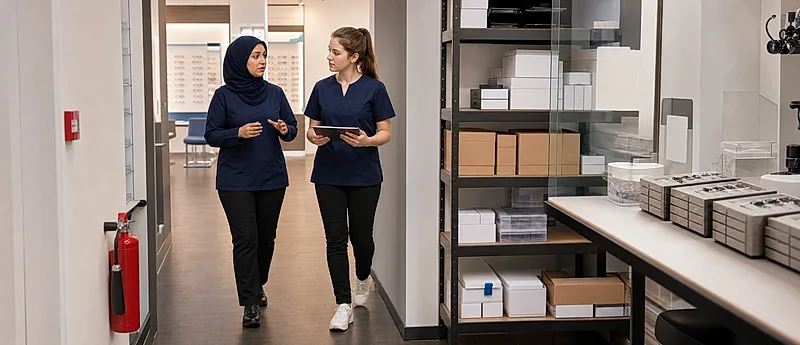
Lone working in optical practice covers situations where a person is physically alone in the building and also moments when staff work without close supervision or without realistic immediate help for part of a task, part of a shift or while away from the main practice.
This course is aimed at optical assistants, reception and admin staff, retail and dispensing support, managers, locums, temporary staff and anyone who may work alone or in isolated moments in an optical setting. It concentrates on practical actions: recognising risk, using local check-in and alarm arrangements, keeping exits and routes to help clear, leaving unsafe situations early, and reporting incidents and near misses so systems can improve.
Lone working is not automatically prohibited. Some tasks can be done safely alone when risks are identified and controlled. Other tasks, times or situations will be unsuitable without another person nearby. The safe option is to know local limits before the situation changes.
Where lone working can arise
- Reception or retail areas while colleagues are in test rooms, on lunch or away from the desk.
- Pre-screening rooms, stock rooms, repair areas, basement spaces, back offices or during cleaning tasks.
- Opening, closing, locking up, taking bins out, cashing up, moving stock or waiting for deliveries.
- Late clinics, staff sickness, small branches, temporary cover, locum shifts or rota gaps.
- Travel between sites, bank or post-office tasks, care-home drops, deliveries or collecting items.
Learner spine
- Spot risk: notice isolation, aggression, poor exits, unfamiliar tasks, late hours or broken systems.
- Check the task: decide whether the work is suitable for one person at this time.
- Keep in touch: follow check-in, return, alarm, phone or radio arrangements.
- Keep space: protect visibility, exits and distance where possible.
- Leave and get help: personal safety comes before cash, stock, pride or finishing the task.
- Report and review: incidents, near misses and unsafe systems should lead to learning.
By the end of the course you should be better able to recognise lone-working risk in routine optical tasks and take early action before a situation becomes harder to control.
Rate this page
Sign up now for a free account
Course tools & details

