

Welcome
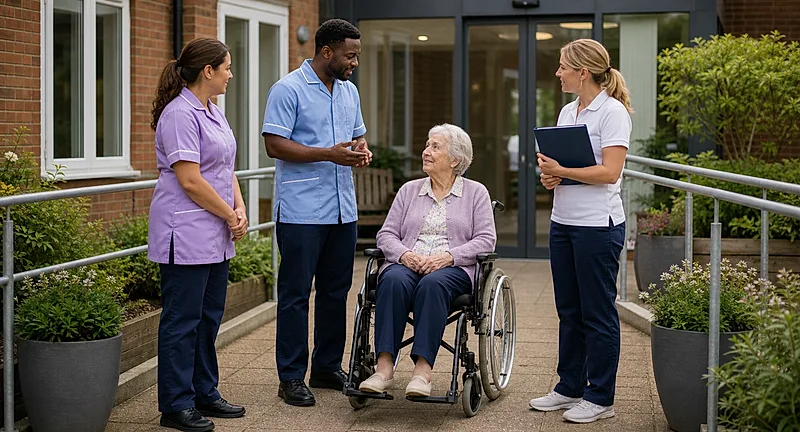
Personal safety in adult social care means reducing the chance that staff are harmed, threatened, intimidated, trapped, isolated, or left without support while providing care. It covers physical assault and aggression as well as risks from lone working, night shifts, unsafe layouts, visitors, harassment, sharps injuries, slips and trips, and the emotional impact of repeated incidents.
This course is for care assistants, senior carers, support workers, activity staff, night staff, housekeeping and domestic staff, team leaders, supervisors, and other frontline workers in residential care homes, nursing homes, supported living, and similar adult social care settings.
The course is written for care staff across the UK. It follows Great Britain HSE guidance on work-related violence, lone working, health and social care violence risks, sharps injuries, and RIDDOR reporting, with signposting to HSENI where Northern Ireland reporting differs. Some regulatory examples use CQC because they are clear for adult social care; Wales, Scotland, and Northern Ireland have their own regulators and local employer procedures.
Why This Course Matters
- Personal safety is not a luxury: staff cannot deliver safe, dignified care if they feel frightened, unsupported, or repeatedly exposed to avoidable harm.
- Violence is broader than assault: verbal abuse, threats, intimidation, harassment, and aggressive behaviour are all work-related violence risks.
- Care homes have particular risks: dementia, delirium, pain, family pressure, night staffing, intimate care, medicines, equipment, and isolated areas can all affect safety.
- Distress needs understanding, not blame: a resident may not intend harm, but staff still need safe systems, support, and clear escalation routes.
- Reporting matters: under-reporting hides patterns and makes it harder for managers to improve staffing, care plans, environments, and training.
How This Course Will Help You
By the end of the course you should be better able to spot warning signs, use safer communication, maintain boundaries, carry out lone or isolated tasks more safely, reduce environmental hazards, respond to sharps injuries, report concerns promptly, and support learning after incidents or near misses.
A Simple Personal Safety Spine
- Notice: be aware of warning signs, triggers, the environment, and your own unease.
- Create space: keep exits clear, avoid being trapped, and move away early if needed.
- Slow it down: use calm communication and offer simple choices where safe.
- Set limits: do not accept abuse, threats, harassment, or unsafe lone working as part of the job.
- Get help: use alarms, colleagues, seniors, emergency services, or safeguarding routes when required.
- Report and learn: incidents and near misses should lead to review, support, and safer systems.
Rate this page
Sign up now for a free account
Course tools & details

