

Cleaning, disinfection and room reset
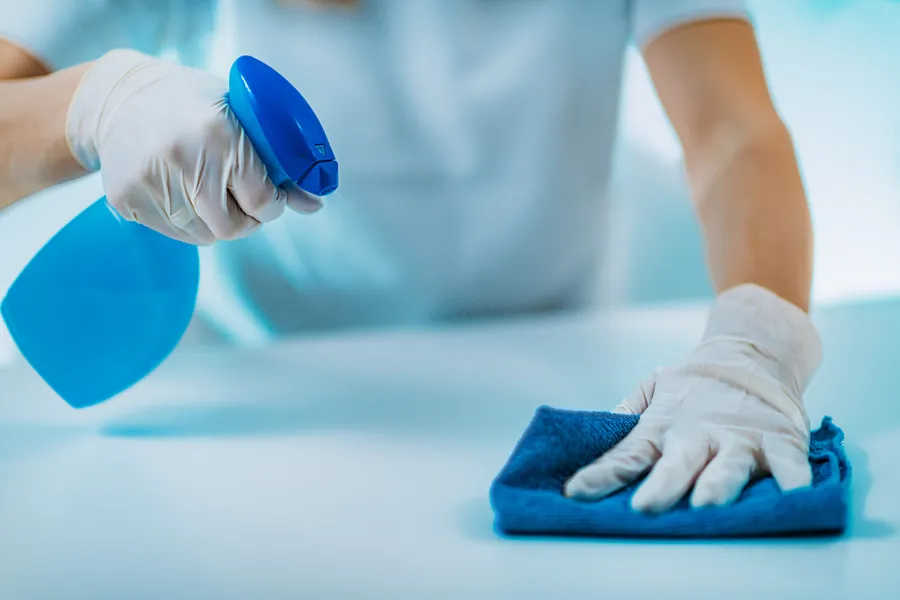
Equipment cleaning requires the correct method for each item. A product suitable for a counter can damage plastic frames, lens coatings, screens, electronic controls or contact devices. A brief wipe may be ineffective if a longer contact time or a drying step is needed.
Routine cleaning supports infection prevention, patient comfort and the reliability of devices. Follow manufacturer instructions, local SOPs and any directions from the registrant or manager responsible for the task.
Standard Infection Control Precautions Management of Care Equipment
Cleaning basics for equipment
- Clean before disinfecting: visible dirt or residue can prevent a disinfectant working.
- Use approved products: do not substitute a stronger product or a household spray.
- Respect contact time: some wipes require the surface to remain wet for a stated period.
- Avoid unsafe spraying: do not spray liquid directly onto sensitive equipment unless the instructions allow it.
- Let items dry: wet surfaces can be uncomfortable, ineffective or damaging if used immediately.
- Separate clean and used items: use trays, zones or labels so staff do not have to guess.
Room reset
Room reset means leaving the room clean, safe and ready for the next patient or colleague. It may include wiping patient contact points, removing used tissues, replacing covers or paper, clearing personal items, checking cables, resetting seating and confirming results have been saved or handed over.
Treat room reset as part of patient safety, infection control, records and workflow reliability, not as housekeeping only.
Clean equipment by the approved method. Stronger, wetter or faster is not automatically safer.
Ask Dr. Aiden
Rate this page
Sign up now for a free account
Course tools & details

