

What safe equipment use means in support work
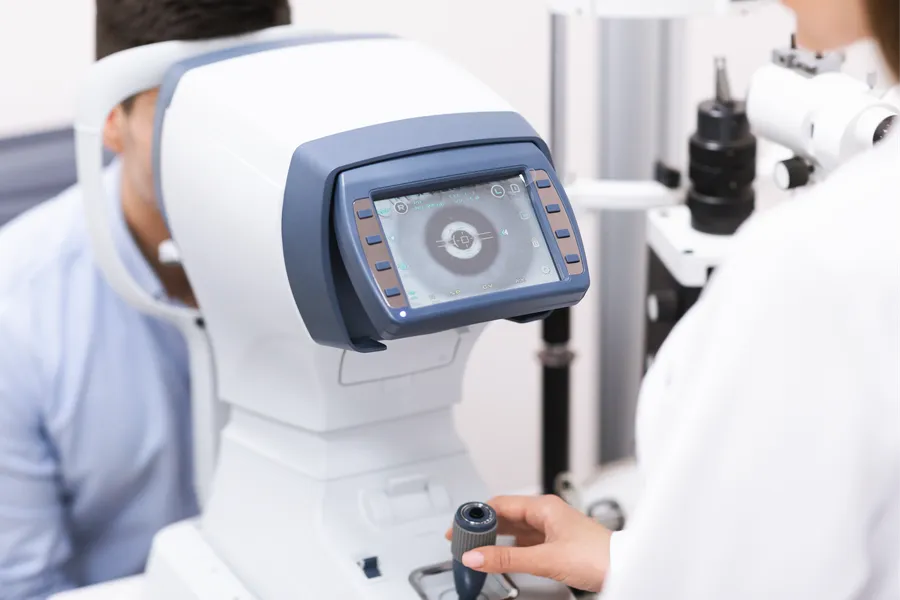
Safe equipment use means choosing the right device for the task and the patient, ensuring it is in good working order, and working only within your training and supervision. It requires more than knowing which button to press.
Support staff may prepare rooms, position patients, operate selected devices, clean routine items, reset spaces, upload images, attach results to records, adjust frames or assist with collections. Each activity needs clear local limits because equipment outputs, patient comfort and record accuracy can affect clinical decisions and trust.
Safe use includes
- Task clarity: know why the equipment is being used and what you are authorised to do.
- Training and sign-off: do not use a device because it looks familiar or because the clinic is busy.
- Patient explanation: explain the procedure in plain language and check the patient is comfortable.
- Equipment condition: check for damage, missing parts, dirt, error messages, heat, noise or an unstable setup.
- Role boundaries: do not interpret images, pressures, fields, measurements or clinical risk unless your role explicitly allows it.
- Escalation route: know who is responsible when the task, patient, device or result is not routine.
Patient assumptions
Patients may expect anyone operating equipment to explain the results. Make your role clear. A useful script is: "I am trained to take the measurement and pass it to the optometrist. They will interpret it and explain what it means."
Do not guess answers to reassure a patient. It is safer to involve the appropriate colleague than to offer a clinical interpretation outside your remit.
Safe equipment use is task-specific. If you have not been trained and authorised, pause and escalate.
Ask Dr. Aiden
Rate this page
Sign up now for a free account
Course tools & details

