

What safeguarding disclosures, professional curiosity and information sharing mean
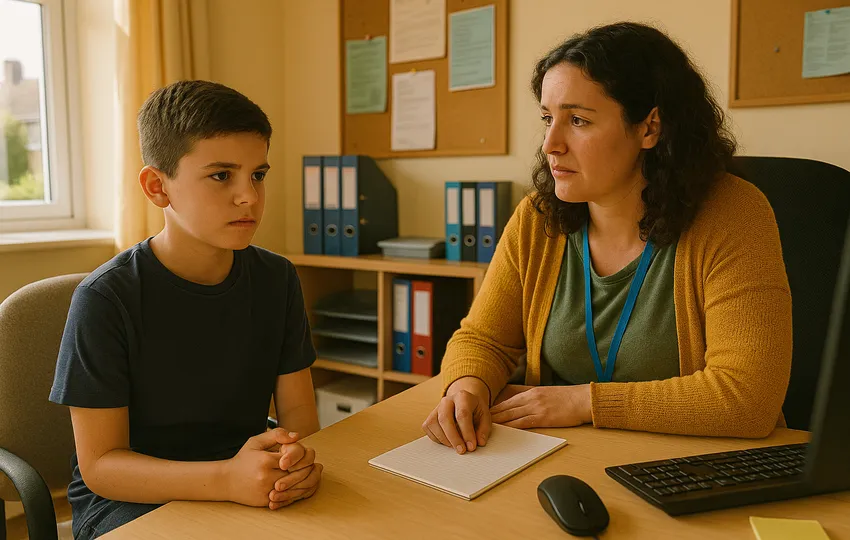
A safeguarding disclosure is any information indicating a child may be suffering abuse, neglect, exploitation or other significant harm. Disclosures can be direct words or partial comments, changes in behaviour or body language, drawings, online activity, what peers say, or a child's reaction to a person, place or event.
Professional curiosity means checking beyond the obvious explanation. It involves asking what else could account for the signs you see, what the child may be trying to communicate, which facts are missing and whether several small concerns point to a single safeguarding issue.
Key ideas for frontline staff
- Disclosures may be partial: children often test safety before saying more.
- Behaviour can be communication: silence, aggression, fear, withdrawal and secrecy can all signal concern.
- Curiosity is practical: it helps staff link incidents, people, places and timing to form a clearer picture.
- Information sharing is protective: no single worker will hold the whole picture.
- Data protection is not a stop sign: it permits lawful, proportionate sharing where it safeguards a child.
Working Together 2026 states that no single practitioner can hold the full picture of a child's needs and circumstances. In children's homes, low-level concerns should not remain only in one worker's memory or a single shift notebook.
Good safeguarding often starts when a worker treats one uneasy detail seriously enough to record it and tell someone.
Ask Dr. Aiden
Rate this page
Sign up now for a free account
Course tools & details

