

Handling pressure, interruptions and difficult moments
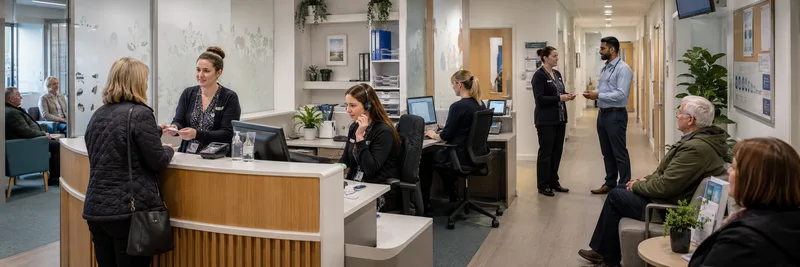
Work at the GP reception desk is often busy and unpredictable. Phones ring while patients wait, online messages arrive, clinicians request urgent tasks, documents need scanning and appointments can run late. Stress and interruptions increase the risk of mistakes.
Professional behaviour under pressure relies on consistent use of systems and procedures rather than memory or "hero" responses. It also means recognising when a situation has become unsafe for staff, patients or the practice and acting accordingly.
Pressure points to watch
- Interruptions while recording information.
- Switching between several patients or tasks at once.
- Rushing identity checks because a caller sounds impatient.
- Trying to resolve clinical uncertainty without checking with a clinician.
- Continuing a call or desk conversation after it becomes abusive or threatening.
When pressure rises, slow down the safety-critical steps: identity, recording, escalation and handover.
Ask Dr. Aiden
Rate this page
Sign up now for a free account
Course tools & details

