
The Role of GP Receptionists and Care Navigators (Level 2)

First contact, patient trust, admin safety and team boundaries

  • Reputation

    No token earned yet.

    Reach 50 points to earn the Peridot (Trainee Level).

  • CPD Certificates

    Certificates

    You have CPD Certificates for 0 courses.

  • Exam Cup

    No cup earned yet.

    Average at least 80% in exams to earn the Bronze Cup.

Launch offer: Certificates are currently free when you create a free account and log in. Log in for free access

What GP receptionists and care navigators do day to day
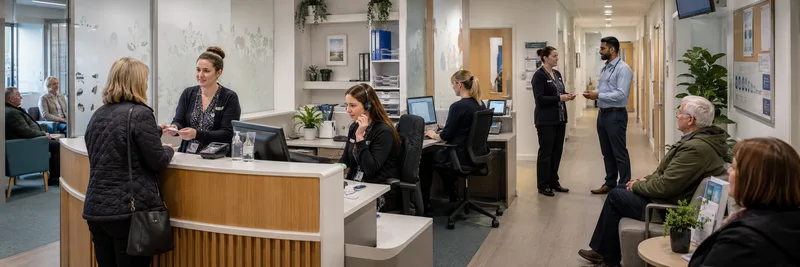
Busy GP reception area with staff and patients

The role covers many tasks: answering calls, greeting patients, handling online requests, booking and checking appointments, updating contact details, passing messages, dealing with prescription queries, scanning documents, supporting registrations and form completion, and liaising with clinicians.

Some work is done in front of patients; other tasks are administrative but still affect care. Sending a message to the right clinician, correcting a phone number, recording a patient's communication needs or checking an appointment type can prevent delays and miscommunication.

What is a receptionist, and how do they support general practice?

Video: 1m 46s · Creator: NHS Black Country Integrated Care Board (ICB). YouTube Standard Licence.

This NHS Black Country Integrated Care Board video features a GP receptionist describing the role as the first voice or face a patient may meet, and noting that this first contact can set the tone for the rest of the conversation and consultation.

The receptionist explains that early-morning calls are often very busy and that staff may ask questions so they can direct patients to the most appropriate person or service. The example given is a patient with blurred vision and eye pain being directed to an optician rather than waiting to speak to a GP.

The video notes that some patients freely describe symptoms while others are more reluctant because the issue is personal. Staff should avoid pressing for unnecessary detail but explain that sharing relevant information helps the practice direct clinician time where it is most needed.

Was this video a good fit for this page?

Typical parts of the role

  • Patient contact: phone, desk, online forms, text replies and occasional difficult conversations.
  • Administrative accuracy: records, demographics, appointments, referrals, recalls, results and document handling.
  • Team coordination: messages, handover, checking local routes and knowing who can help.
  • Access support: helping patients understand the right route while staying within agreed boundaries.

Scenario

A new staff member says, "I thought this job was mainly answering the phone, but I have been asked to update a patient's contact details, pass a message to the pharmacist and check whether a results task was completed."

How should the role be understood?

Reception and care navigation are administrative safety roles within the practice team, not solely customer service.


Ask Dr. Aiden


Rate this page


Course tools & details Study tools, course details, quality and recommendations
Funding & COI Media Credits
