
The Role of GP Receptionists and Care Navigators (Level 2)

First contact, patient trust, admin safety and team boundaries

  • Reputation

    No token earned yet.

    Reach 50 points to earn the Peridot (Trainee Level).

  • CPD Certificates

    Certificates

    You have CPD Certificates for 0 courses.

  • Exam Cup

    No cup earned yet.

    Average at least 80% in exams to earn the Bronze Cup.

Launch offer: Certificates are currently free when you create a free account and log in. Log in for free access

Working with GPs, nurses, pharmacists and the wider practice team
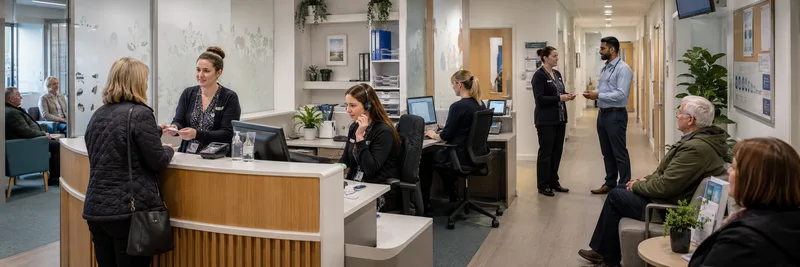
Busy GP reception area with staff and patients

General practice is delivered by a team. Patients may be seen by GPs, nurses, healthcare assistants, clinical pharmacists, first contact physiotherapists, mental health practitioners, social prescribing link workers, care coordinators, paramedics, practice managers and community services.

Receptionists and care navigators help patients understand who can assist with their problem. That does not mean implying a GP is unavailable; it means explaining which professionals have the relevant skills and how the practice directs patients to suitable support.

Who makes up your local GP practice team? (NHS England Short Film)

Video: 2m 17s · Creator: Frimley Health and Care Integrated Care System. YouTube Standard Licence.

This Frimley Health and Care Integrated Care System video shows that practice teams include more than doctors and nurses. It opens with a receptionist explaining that asking routine questions helps staff direct patients to the right professional or to another local service.

The video introduces several roles. A social prescriber describes practical, non-medical support such as activity groups, benefits forms and help accessing community services. A physiotherapist explains that people with bone, muscle or joint problems may be booked directly with them instead of initially seeing a GP.

A paramedic describes home visits for patients who are too unwell or unable to attend the practice. The film also describes mental health support and ends by noting that answering receptionist questions helps patients reach appropriate care, because many people in the practice team can contribute to treatment.

Was this video a good fit for this page?

Good team working includes

  • Knowing local roles well enough to explain them simply.
  • Using approved pathways rather than personal preference.
  • Respecting each team member's scope and workload.
  • Giving clinicians clear information without unnecessary detail.
  • Feeding back when patients are confused by how roles are described.

Scenario

A patient says, "I asked for a doctor, not a pharmacist. Are you fobbing me off?" The local protocol says medication-review queries should usually go to the practice pharmacist first.

How can you explain the wider team without overstepping?

Reception staff do not need to know every clinical detail, but they must know local roles, referral routes and when to check.


Ask Dr. Aiden


Rate this page


Course tools & details Study tools, course details, quality and recommendations
Funding & COI Media Credits
