

Privacy, safe contact and control
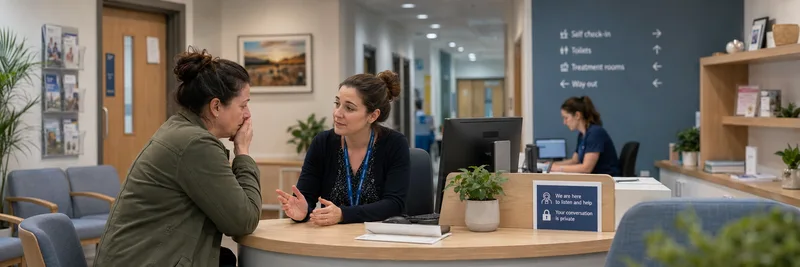
Privacy can affect safety. Patients may be monitored by partners, family, carers, employers or others. A call, voicemail, letter or online message can increase risk if the wrong person sees or hears it.
Check safe contact
Safe-contact concerns may be explicit, for example "Do not call my home number," or shown indirectly, such as whispering, looking over a shoulder, or asking for messages to be withheld.
Staff should respond to these clues. Follow local procedures for recording safe-contact notes, logging safeguarding concerns and using alternative communication. Avoid leaving detailed voicemails unless policy and the safe-contact record allow it.
Potential risks
- Shared phones or monitored accounts.
- Proxy access to online records.
- Letters opened by another person.
- Desk conversations overheard by waiting-room patients.
Trauma-informed communication protects privacy because unsafe disclosure can cause real harm.
If the usual route is not working, the problem should be visible to the team. The aim is to make the next contact safer rather than asking the patient or carer to repeatedly work around a poor process.
Consistent wording across the team matters. Different explanations from different staff can make the service seem unpredictable or dismissive to someone who already feels unsafe.
Safe-contact instructions are meaningful information. They may signal domestic abuse, coercion, stalking, family conflict or another risk. The practice must be able to record and act on them discreetly.
Unsafe contact can undo good intentions. A well-meant voicemail, letter or text can increase danger if someone else monitors the patient's communications.
Ask Dr. Aiden
Rate this page
Sign up now for a free account
Course tools & details

