

Recording, staff support and learning
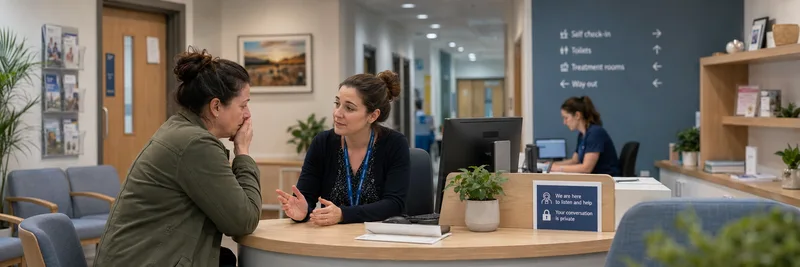
Trauma-informed services include support for staff. Difficult contacts can be upsetting, especially when they involve abuse, self-harm, threats or repeated distress.
Record factually
Records should state what was said, what was observed, what action was taken and who is responsible for follow-up. Avoid labels such as "overreacting", "hysterical" or "manipulative".
Staff should be able to debrief after distressing contacts. Debriefing helps staff remain calm and consistent and allows the practice to learn from near misses or repeated barriers.
Learn from patterns
- Repeated unsafe contact methods.
- Patients retelling distressing histories unnecessarily.
- Staff unsure how to escalate safeguarding concerns.
- Access routes that increase distress for certain patients.
A trauma-informed practice supports both patients and staff after difficult contacts.
If the usual route is not working, that should be visible to the team. The aim is to make the next contact safer rather than repeatedly asking the patient or carer to compensate for a confusing process.
Consistent wording across the team matters. When staff give different explanations, patients who already feel unsafe can experience the system as unpredictable or dismissive.
Staff exposed to distressing material may need a short reset, a debrief or manager support. Without support, staff can become defensive or avoidant, which may make future contacts less safe.
Staff support is part of trauma-informed practice. Teams that debrief and learn from difficult contacts respond more calmly in future encounters.
Ask Dr. Aiden
Rate this page
Sign up now for a free account
Course tools & details

