

Welcome to GOC Standard 11: Safeguarding Children in Optical Practice
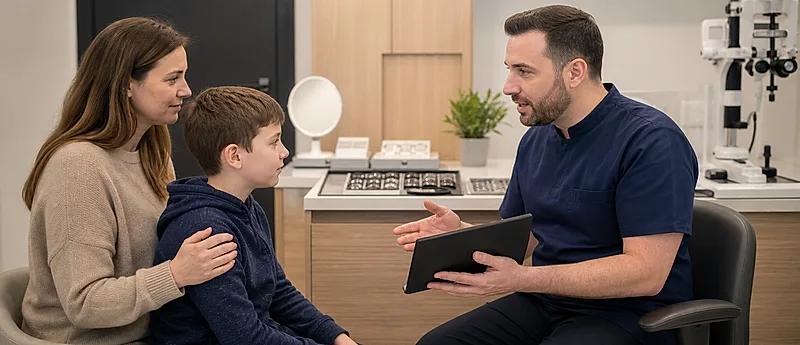
Welcome to this focused CPD course on recognising, responding and acting to safeguard young patients in optical settings. This course explains how Standard 11 applies in everyday optical practice - from history-taking and clinical examination to documentation, information-sharing and timely escalation - equipping you to protect children effectively and fulfil your statutory and professional duties.
What you will learn
- The core principle: putting the child's safety first - notice signs, record contemporaneously, share the minimum necessary information lawfully, and escalate promptly when significant harm is suspected.
- How to recognise optical "red flags" (physical injury patterns, neglect indicators such as missed amblyopia care or repeatedly broken spectacles, emotional and sexual abuse and contextual indicators).
- Practical, immediate actions to keep a child safe and how to respond to disclosures (what to say, what not to say, and how to record verbatim).
- Legal and regulatory essentials in the UK (Children Acts, Working Together, FGM mandatory reporting, Prevent, Modern Slavery, and data protection considerations).
- How to use information-sharing principles: lawful basis, minimum necessary, documentation and the Caldicott approach.
- The role and responsibilities of the practice safeguarding lead and how every clinician should act when they spot risk.
- Practical steps for referral and escalation (telephone referral checklist, contacting MASH/children's services, police when required).
- Working in community and domiciliary settings: pre-risk assessment, check-in systems and safe exit strategies.
- Adapting practice for vulnerable groups (children with disabilities, looked-after children, migrant families, adolescents at risk).
- Systems-based prevention: SOPs, private spaces, training, recruitment checks, scenario drills and audit.
Safeguarding is about protecting the child, not proving harm. When in doubt, act: keep the child safe, record contemporaneously, involve your safeguarding lead and use local multi-agency pathways.
How this course will help you in practice
- Increase confidence to recognise and act on safeguarding concerns in optical contexts.
- Improve the quality and legal robustness of your records - verbatim quotes, timings, injury descriptions, chronology and logged referrals.
- Strengthen information-sharing decisions (what to share, with whom and why) using lawful bases and professional judgement.
- Prepare you for real-world scenarios - disclosures at reception, parent-dominant consultations, domiciliary challenges and cumulative neglect.
- Enable better coordination with multi-agency partners (children's services, police, school nursing and GPs) and clearer, more effective referrals.
- Provide practical templates, checklists and telephone prompts you can adopt immediately in your practice.
Who should complete this course
- Optometrists and dispensing opticians
- Optical assistants, contact lens practitioners and technicians
- Reception and practice administrative staff
- Domiciliary clinicians and practice managers
- Any staff involved in appointment management, repair/dispensing or triage who may encounter children
Course format and expectations
- Short, practical modules covering recognition, response, documentation and escalation.
- Realistic scenario practice, checklists and downloadable templates for immediate use.
- Guidance on local adaptation - how to map national duties to your local referral routes and duty contacts.
- Recommended: ensure your practice safeguarding lead contact details and local authority referral numbers are to hand before you start.
Practical tips you can use today
- Immediate danger? Call 999 - do not discharge a child to an unsafe situation.
- Keep the child calm and safe; if a disclosure occurs, listen, thank them, avoid leading questions and explain (age-appropriately) what will happen next.
- Stop clinical activity if needed and move to a private area (with another staff member nearby if appropriate).
- Record verbatim statements, exact times, who was present and clinical findings contemporaneously.
- Inform the safeguarding lead immediately; if unavailable and risk is urgent, contact children's services directly.
- Use the minimum necessary information when sharing and document the lawful basis and recipients.
Next steps
- Start the modules in sequence and complete the scenario exercises.
- Update or confirm your practice safeguarding lead and deputy details.
- Print or store the local referral numbers and your telephone referral checklist.
- Consider a short team briefing after the course to share learning and update SOPs.
We're glad you're taking this important step to safeguard children in your care. Your actions matter - timely recognition, careful recording and appropriate escalation can make a decisive difference to a child's safety and wellbeing.
Sign up now for a free account
Course tools & details

