
Confidentiality at the Front Desk and on the Telephone

Practical privacy, identity checks and safe disclosure in GP first-contact work

  • Reputation

    No token earned yet.

    Reach 50 points to earn the Peridot (Trainee Level).

  • CPD Certificates

    Certificates

    You have CPD Certificates for 0 courses.

  • Exam Cup

    No cup earned yet.

    Average at least 80% in exams to earn the Bronze Cup.

Launch offer: Certificates are currently free when you create a free account and log in. Log in for free access

Handling questions from relatives, carers and visitors
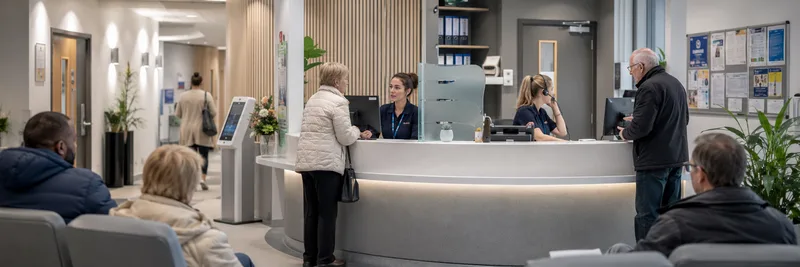
GP practice reception desk with staff and patients

Relatives, carers and friends may ask questions at the desk or on the phone because they are worried, trying to help, frustrated or attempting to monitor or control the patient.

The safe approach is to separate listening from disclosure. Staff can hear concerns, explain how the practice deals with appointments, prescriptions and consent, and point callers to proxy or carer support. They should not reveal personal clinical information without the patient’s authority or another lawful basis.

What can usually be said

  • General process information: how to request an appointment, prescription or proxy access.
  • How the patient can contact the practice: without confirming private details.
  • That concerns can be recorded: if the caller has relevant safety or care information.
  • Where urgent help may be needed: if the caller describes immediate risk.

What needs caution

Do not disclose appointment attendance, test results, medication details, clinic letters, diagnoses, safeguarding records or contact preferences unless the person has clear authority and the disclosure is appropriate.

Be especially cautious when the caller is demanding, angry, controlling, or asks for information the patient has specifically restricted.

You can listen to a concern without confirming confidential information.

Consent to share - a video for Southern Health Staff

Video: 2m 6s · Creator: Hampshire and IOW Healthcare NHS Foundation Trust. YouTube Standard Licence.

This Hampshire and IOW Healthcare NHS Foundation Trust video uses two short phone-call examples to show how staff can respond when a family member contacts a service but the patient has not given consent to share information.

In the first example, staff refuse to share information because consent has not been given and the call ends. In the second, staff still protect confidentiality but invite the family member to describe what they know about the patient. The caller mentions the patient's interests: football, wildlife photography, live music and action films.

The practical point is that lack of consent to disclose record information does not prevent staff from listening, asking relevant questions and using the caller’s observations to build a fuller picture. Staff can accept helpful information from relatives or carers without confirming confidential details from the record.

Was this video a good fit for this page?

Scenario

A carer says the patient is confused and missing medicines, then asks you to read out the patient's full medication list.

What can you do safely?


Ask Dr. Aiden


Rate this page


Course tools & details Study tools, course details, quality and recommendations
Funding & COI Media Credits
