

Cleaning products, disinfectants and lens-care chemicals
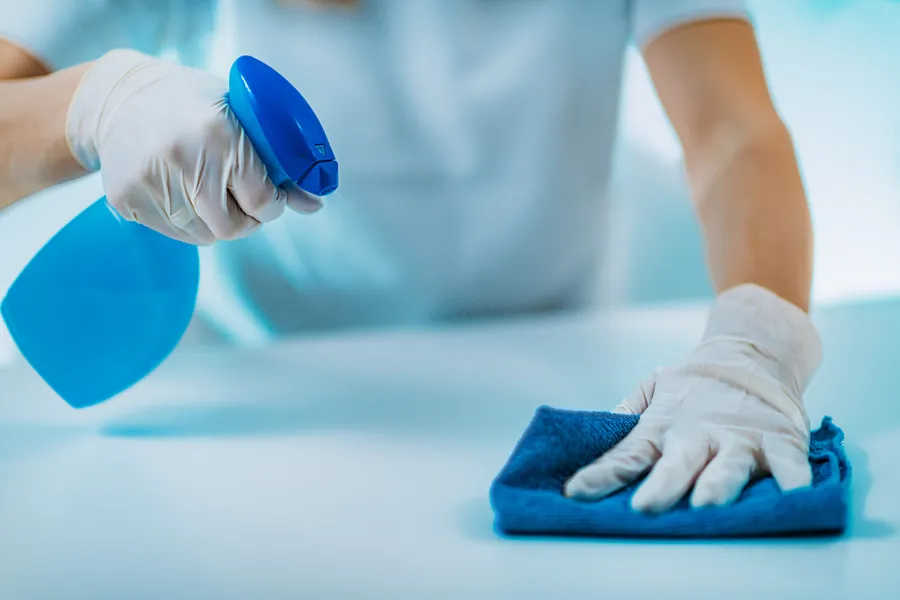
Optical practices rely on cleaning and disinfecting products to reduce infection risk, but those products also pose COSHH hazards if mixed, overused, sprayed incorrectly, stored poorly or used outside their instructions.
P.1 Cleanliness and Decontamination
Video: 15m 15s · Creator: Swansea Bay NHS TV. YouTube Standard Licence.
Was this video a good fit for this page?
Common product groups
- Surface cleaning products: detergents, sprays, wipes, toilet products and descalers.
- Disinfectants: products used for surfaces, equipment touchpoints or enhanced cleaning where local procedure requires them.
- Alcohol products: hand rubs, wipes or other alcohol-based products that may also have fire and storage considerations.
- Contact-lens products: multipurpose solutions and hydrogen peroxide systems where stocked, supplied, demonstrated or handled.
- Optical equipment products: cleaners or wipes that may damage coatings, plastics or electronics if the wrong product is used.
Safe habits
- Use only the product specified locally for the task.
- Follow dilution, contact time, ventilation and PPE instructions.
- Never mix cleaning chemicals or lens-care products.
- Keep peroxide systems clearly identified and away from inappropriate use.
- Do not substitute a stronger product because it seems quicker.
- Report irritation, strong odours, damaged containers or unclear instructions.
Cleaning protects people only when the product and method are safe for the task, the surface and the person using it.
Ask Dr. Aiden
Rate this page
Sign up now for a free account
Course tools & details

