

Welcome
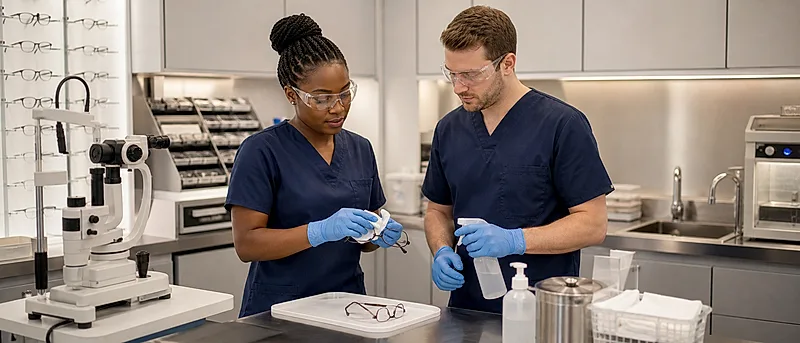
COSHH stands for the Control of Substances Hazardous to Health. In optical practice it covers substances and processes that can damage skin, eyes or the respiratory system if they are not identified, stored, used, controlled or cleaned up correctly.
About this course
This course is aimed at optical assistants, reception and admin staff, retail and dispensing support staff, lab or workshop support staff, cleaners, managers, locums, temporary staff and other members of the optical team. It focuses on recognising hazards, following local controls, stopping unsafe work, and reporting incidents. It does not train learners to prepare formal COSHH assessments unless that is part of their management role.
Common COSHH issues in optical settings include cleaning products, disinfectants, alcohols, contact-lens solutions, hydrogen peroxide systems, aerosols, lens-edging dust, polishing compounds, adhesives, solvents, workshop products, contaminated tissues and waste, spillages and exposure incidents.
Why this course matters
- Hazards are often routine: common cleaning sprays, wipes, lens-care products and workshop materials can still damage skin, eyes or breathing if misused.
- Labels and procedures matter: unlabelled containers, missing safety information or informal practices increase the risk of exposure.
- PPE is not the whole answer: selecting safer products, storing them correctly, ensuring ventilation and following procedures usually reduce risk more effectively than relying on gloves alone.
- Support staff notice problems early: spills, missing labels, skin irritation, blocked ventilation or poor storage should be reported promptly.
- COSHH protects patients too: correct storage and spill response keep patients, children, visitors, contractors and staff safe.
A simple learner spine
- Identify: know the substance or process involved.
- Check: consult labels, safety data sheets and local procedures.
- Control: follow the assessed methods and storage rules.
- Protect: use PPE and skin protection appropriate to the task.
- Respond: act safely in the event of a spill or exposure.
- Report: log incidents, symptoms, missing labels and unsafe workarounds.
By the end of the course you should be able to recognise optical COSHH risks, follow local controls and respond safely when something goes wrong.
Rate this page
Sign up now for a free account
Course tools & details

