

COSHH assessments, controls and role boundaries
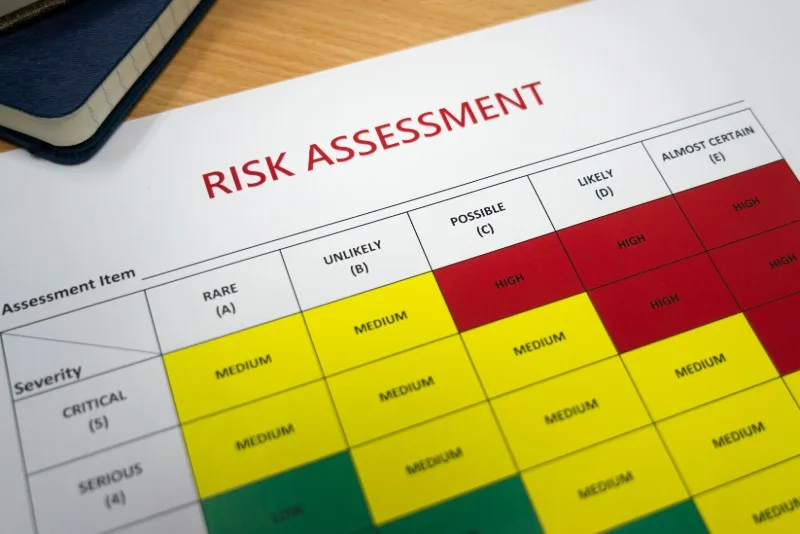
A COSHH assessment records the hazardous substance or process, who might be harmed, how exposure could occur and what controls are needed. Support staff normally do not prepare the assessment, but must follow and understand the controls that affect their work.
What assessments consider
- The substance or process: the harm it can cause and whether a safer alternative is available.
- The task: how often it is done, who does it, and whether exposure could occur via skin contact, eye splash, inhalation, swallowing or puncture injury.
- People at risk: staff, patients, customers, children, contractors, cleaners, visitors and the public.
- Existing controls: product choice, storage, ventilation or extraction, restricted access, spill procedures, PPE and supervision.
- What needs to change: safer products, clearer labelling, different storage, repairs, training, revised procedures or escalation routes.
The hierarchy of control
COSHH requires preventing or reducing exposure. Higher-level controls should be considered before relying on PPE.
- Eliminate or substitute: avoid the hazardous substance or use a safer product where reasonably possible.
- Control the process: reduce splashing, dust, mist or vapour; use closed systems, extraction or ventilation where needed.
- Use safe systems: clear procedures, storage rules, restricted access, training, supervision and proper waste routes.
- Use PPE: gloves, aprons, eye protection or respiratory protection only as specified for the task.
Support-staff boundaries
Follow the local procedure. Use only products and carry out processes you are trained and authorised to use. Stop if you are unsure and escalate missing information or unsafe conditions. Managers or other competent people retain responsibility for the formal assessment, review and records.
Support staff do not need to write COSHH assessments, but they must know and follow the controls derived from them.
Ask Dr. Aiden
Rate this page
Sign up now for a free account
Course tools & details

