

Alarms, fire doors, compartments, and escape routes
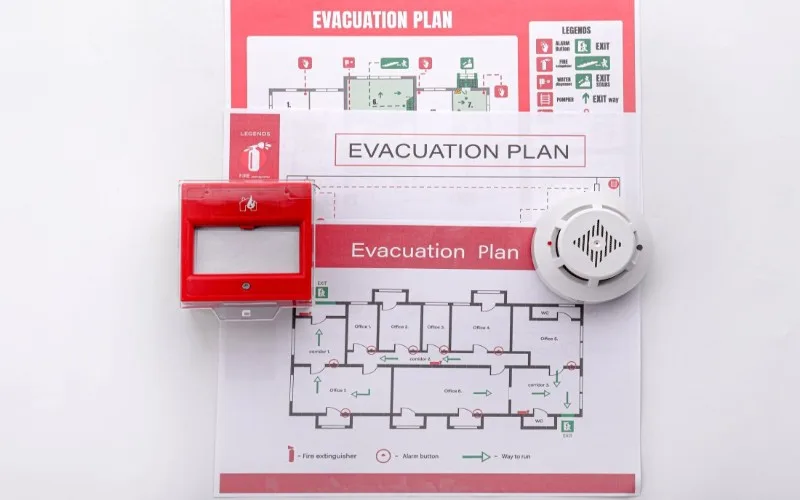
Fire safety in care homes relies on early warning, compartmentation, protected escape routes, correctly fitted fire doors, emergency lighting and signs, and prompt staff action. Staff do not need technical qualifications, but they must not interfere with these measures.
Five Step Fire Door Check
Video: 2m 13s · Creator: Leicestershire Fire and Rescue Service Official Channel. YouTube Standard Licence.
Was this video a good fit for this page?
Key features staff should recognise
- Fire alarm system: how the alarm sounds, where call points are, and what different panels or zones mean locally.
- Fire doors: doors designed to resist fire and smoke spread when closed properly.
- Compartmentation: parts of the building designed to slow fire and smoke spread and support staged movement of residents.
- Escape routes: corridors, stairways, final exits, and external routes that must stay usable.
- Fire equipment: extinguishers, blankets, evacuation aids, signage, emergency lighting, and communication arrangements.
Do not undermine the system
- Do not wedge fire doors open: unless they are held by an approved device linked to the fire alarm system.
- Do not block corridors or stairs: especially with linen, trolleys, boxes, hoists, or chairs.
- Report damaged doors: including poor closing, broken seals, damaged hinges, or doors that drag on the floor.
- Keep call points and extinguishers accessible: equipment hidden behind furniture or stock may be useless in an emergency.
- Report alarm faults immediately: do not assume someone else has done it.
Fire doors, compartments, alarms, and escape routes are active parts of the fire plan. Staff can protect them, or accidentally defeat them, through everyday behaviour.
Ask Dr. Aiden
Rate this page
Sign up now for a free account
Course tools & details

