

Welcome
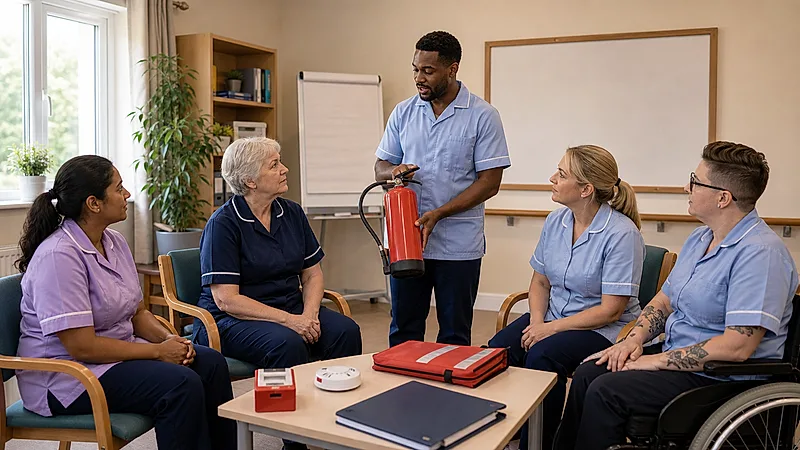
Fire training in a care home differs from training for an office or shop. Many residents cannot leave independently: some may be asleep, confused, frail, or using oxygen. Staff often have to move people to a place of relative safety before any wider evacuation. Knowing the local fire plan is therefore part of providing safe care.
This course is for care assistants, senior carers, support workers, team leaders, supervisors, housekeeping and night staff, activity staff, and other frontline workers in residential care homes, nursing homes, and similar adult social care settings across the UK. The core practice covered is UK-wide: prevent avoidable hazards, know the local fire plan, support residents who cannot self-evacuate, raise the alarm promptly, and follow your home's procedure. Fire-safety law and official guidance differ in England, Wales, Scotland, and Northern Ireland, so always follow local guidance and your employer's procedures.
Why This Course Matters
- Residents may need help: evacuation plans must account for mobility, cognition, hearing and sight loss, oxygen therapy, medication effects, and night-time support needs.
- Fire spreads through ordinary failures: wedged fire doors, blocked corridors, unsafe smoking, poor storage, damaged electrics, and delayed alarms can turn a small incident into a major emergency.
- Care homes need site-specific practice: online learning raises awareness, but staff must know the actual alarm system, exits, compartments, call points, equipment, and evacuation method used in their home.
- Everyone has a role: managers and the responsible person hold formal duties, while frontline staff spot hazards, follow procedures, assist residents, and raise concerns.
- High-risk factors are common: oxygen, emollients, smoking materials, laundry, kitchens, and electrical equipment all require careful control.
How This Course Will Help You
By the end of the course you should be able to recognise common care-home fire hazards, see how fire-safety duties relate to your role, support residents who need help, respond correctly when the alarm sounds, and follow local procedures for evacuation, drills, reporting, and higher-risk situations.
A Simple 6-Step Learner Spine
- Prevent: notice and report hazards before they become emergencies.
- Prepare: know residents' support needs and your local fire procedure.
- Raise the alarm: act immediately if you discover fire or smoke.
- Protect people: follow the local evacuation strategy and help residents safely.
- Communicate clearly: tell seniors and emergency services what is known.
- Learn and improve: use drills, near misses, and incidents to strengthen practice.
Rate this page
Sign up now for a free account
Course tools & details

