

Alarms, escape routes, fire doors and customer areas
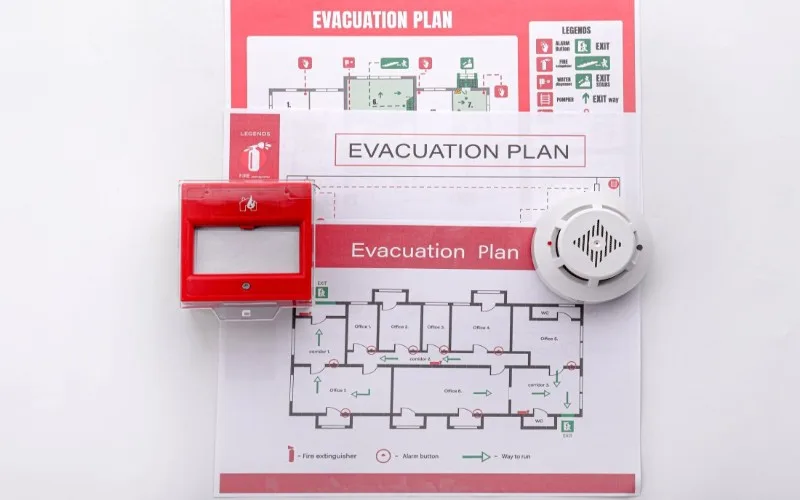
Alarms, escape routes, fire doors, signs and emergency lighting protect people only when staff know how they work and keep them clear and serviceable. Optical staff should recognise the alarm sound, know where call points are, understand which exits to use and be able to guide patients and customers who are unfamiliar with the premises.
Five Step Fire Door Check
What staff should recognise
- Fire alarm call points: know where they are and how to raise the alarm immediately.
- Escape routes: know the main route and at least one alternative if the usual route is blocked.
- Final exits: they must be usable when the premises are occupied and should not be blocked by stock or displays.
- Fire doors: do not wedge them open unless an approved automatic hold-open device is fitted and working.
- Consulting and screening rooms: patients may be behind closed doors or using equipment when the alarm sounds.
- Lifts: do not use ordinary lifts during evacuation unless a specific evacuation lift or other arrangement is named in the local fire plan.
- Shared routes: shopping centres, upper-floor units and multi-occupied buildings may have shared arrangements that staff must understand.
Supporting people in customer areas
Members of the public may be unfamiliar with the layout. Some will have low vision, hearing loss, mobility needs, anxiety, dementia, learning disability or limited English. Staff should give calm, short instructions and guide people to the nearest safe route following local procedure.
Where someone is likely to need assistance, follow any personal emergency evacuation plan, visitor assistance arrangement or local equivalent. Do not attempt improvised carrying or lifting methods during an emergency.
Support staff should not make clinical judgements during a fire response. If a patient is unwell, distressed or connected to equipment, alert the optometrist, dispensing optician, manager or first aider as set out locally, while keeping evacuation and alarm response the priority.
Fire doors and escape routes are active safety controls. Staff can protect them, or accidentally defeat them, through everyday behaviour.
Ask Dr. Aiden
Rate this page
Sign up now for a free account
Course tools & details

