

What to do if you discover fire or the alarm sounds
If you discover fire or smoke, act immediately. Do not investigate longer than is safe, do not wait to see whether it develops and do not assume someone else has raised the alarm. Follow your practice's local fire procedure.
Calling 999 for the Fire Service
Video: 4m 32s · Creator: DWFireRescue. YouTube Standard Licence.
Was this video a good fit for this page?
Immediate priorities
- Raise the alarm: use the nearest call point or local alarm process.
- Call for help: alert colleagues, the supervisor, manager or clinician as set out in the local plan.
- Call 999: ensure the fire and rescue service is contacted according to local procedure. Do not assume the alarm automatically alerts them unless your plan confirms this.
- Guide people out: help patients, customers, visitors and contractors leave by the nearest safe route.
- Close doors if safe: follow local procedure; closing doors can slow smoke and fire spread.
- Do not delay: do not finish a sale, collect personal belongings, save stock, shut down routine systems or continue a non-urgent task.
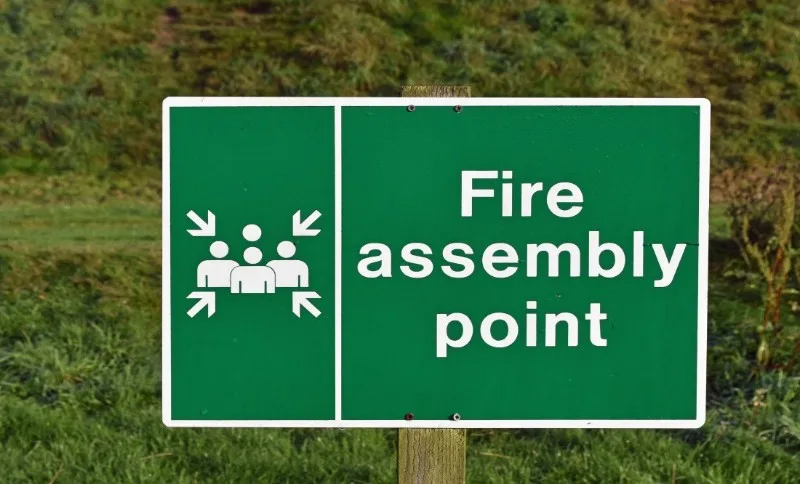
- Go to the assembly point: report in and help account for staff and visitors where this is your role.
- Do not re-enter: wait until the fire and rescue service or the responsible person confirms it is safe.
Information emergency services need
- Exact location: practice name, address, floor, unit number, access point and a nearby landmark if helpful.
- Where the fire or smoke is: retail area, consulting room, screening room, office, stock room, workshop or shared corridor.
- People at risk: anyone missing, trapped, disabled, unwell, distressed or needing assistance.
- Known hazards: electrical equipment, chemicals, aerosols, oxygen if present, batteries, contractors or blocked routes.
- Evacuation progress: who has left, where people are assembled and whether any areas were not checked.
If you discover fire or the alarm sounds, raise the alarm, help people leave and follow the local plan. Delay is one of the biggest dangers.
Ask Dr. Aiden
Rate this page
Sign up now for a free account
Course tools & details

