

Walking support, falls and when not to lift
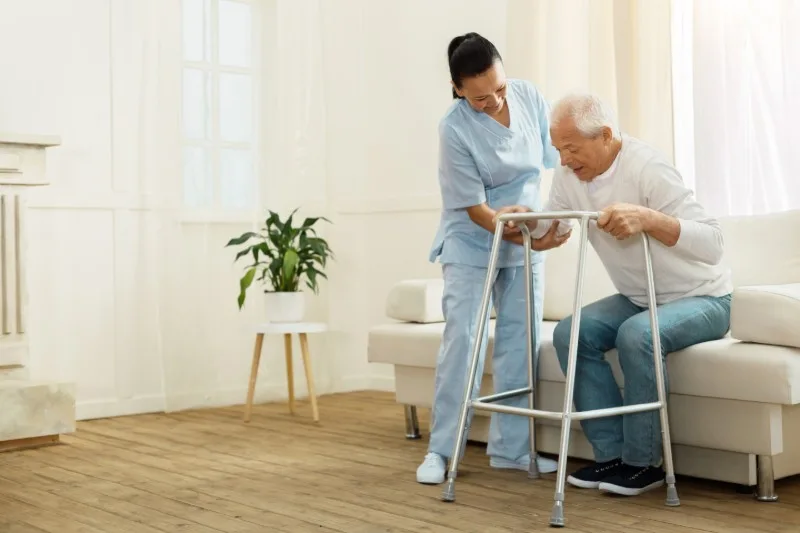
Helping someone to walk is a moving and handling task that may involve judging pace, distance, footwear, fatigue, dizziness, clutter, timing of medicines and how much support the person needs. Staff must follow the person's mobility plan and avoid creating risk by pulling, rushing or taking the person's weight unexpectedly.
The HSE notes that the natural reaction to try to prevent a fall can injure both the person and the worker. Correct positioning, clear support and approved methods reduce risk. If a person slides or falls, staff should follow the local falls and emergency procedure rather than attempting an unplanned manual lift from the floor.
Safer principles
- Follow the mobility plan: know whether the person needs supervision, hands-on support, a frame, a wheelchair nearby or another staff member.
- Position yourself safely: provide support without twisting your back or taking a sudden full load through your arms.
- Watch for change: new weakness, shuffling, breathlessness, dizziness, pain or confusion may mean the plan no longer fits.
- Do not pull under the arms: do not drag a person up if they are slipping.
- After a fall or slide: make the person comfortable, check for injury, summon help and use the approved post-fall method and equipment.
- Emergency danger is different: if there is immediate life-threatening danger follow local emergency procedures, but do not use "emergency" as a routine reason for risky lifting.
When someone starts to fall, the safest response is usually controlled support and proper follow-up, not a desperate manual lift back to standing.
Ask Dr. Aiden
Rate this page
Sign up now for a free account
Course tools & details

