

Welcome
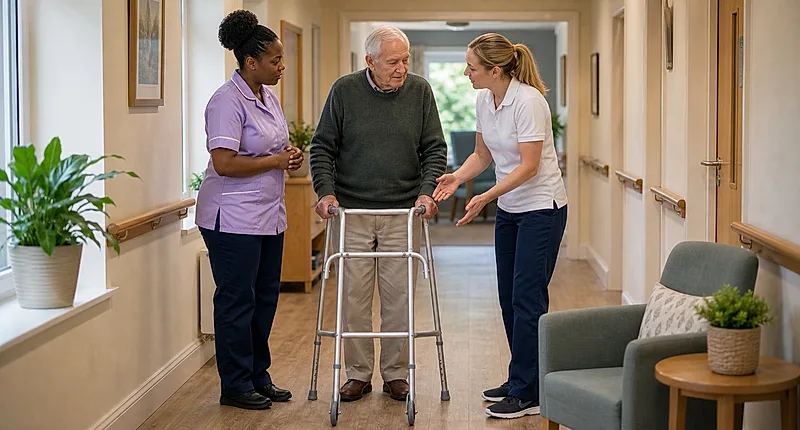
Manual handling is a routine part of care work. It covers helping someone move in bed, supporting a person to stand, using a hoist, guiding safe walking, pushing equipment, moving laundry and stock, and working in tight or time-pressured situations. Poor practice can cause injury, distress, loss of dignity or reduced independence.
This course is for care assistants, senior carers, support workers, team leaders, supervisors, night staff and other frontline care staff in residential care homes, nursing homes, supported living and adult social care settings. It provides frontline awareness and practical guidance; it does not replace local practical training, supervised assessment or a service-specific moving and handling competency sign-off.
The course is written for care staff across the UK. It follows HSE guidance on manual handling and moving and handling in health and social care for the core approach used in England, Scotland and Wales, and it signposts HSENI guidance and Northern Ireland regulations where arrangements differ. England-specific CQC examples are included where regulation adds useful context. Staff must follow employer policy, each person's moving and handling plan, and any nation-specific arrangements.
Why This Course Matters
- People and staff can both be injured: poor moving and handling can cause falls, skin damage, shoulder and back strain, pain, fear and reduced confidence.
- Dignity matters as much as technique: safe handling should support comfort, consent, privacy and independence as well as getting the task done.
- Improvisation creates risk: rushed manual lifts, wrong slings, blocked spaces, missing equipment and unclear plans are common causes of harm.
- Training alone is not enough: safer handling requires assessment, appropriate equipment, adequate staff, a suitable environment, ongoing review and a culture where staff can stop unsafe practice.
- Everyday choices make a difference: reporting pain, defects, resident changes or awkward transfers early can prevent repeat harm.
How This Course Will Help You
By the end of the course you should be better at spotting hazardous manual handling, using the avoid-assess-reduce approach, following person-centred moving and handling plans, operating equipment safely, respecting consent and dignity during transfers, responding correctly if someone slides or falls, handling inanimate loads safely, and reporting pain, near misses, equipment faults and unsafe systems clearly.
A Simple Safer-Handling Spine
- Avoid: do not create manual handling risk if a safer method or aid is available.
- Assess: use the moving and handling plan, care plan, local procedure and the situation in front of you.
- Prepare: check the person, equipment, environment, staff numbers and route before you start.
- Communicate: explain what will happen, gain agreement, pace the move and stop if the person becomes distressed or the plan no longer fits.
- Report: treat pain, near misses, damaged equipment, poor space and repeated unsafe workarounds as issues to escalate.
Rate this page
Sign up now for a free account
Course tools & details

