

Signs of Child Physical Abuse
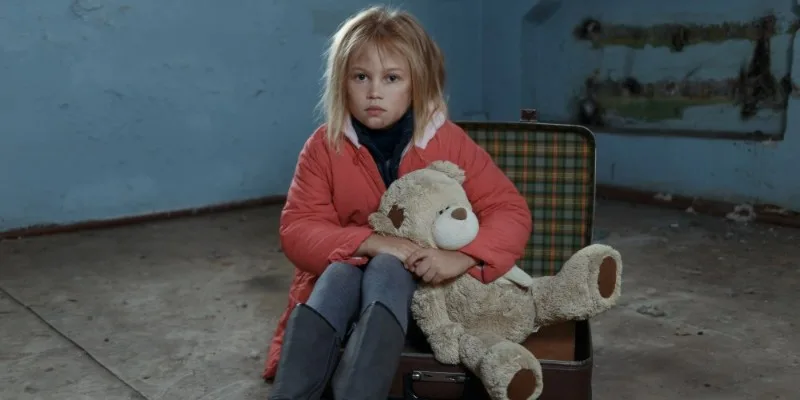
Physical abuse involves deliberately causing physical harm to a child. In a pharmacy setting, you are not expected to diagnose an injury or decide exactly how it happened. Your role is to notice when something looks or feels concerning, especially if the explanation does not fit the presentation or if similar worries keep appearing over time.[5][7]
A child may come into the pharmacy with visible bruising, soreness, or restricted movement, but physical abuse is not always that obvious. Sometimes the strongest warning sign is the child's behaviour. They may flinch when an adult moves suddenly, shrink away from touch, seem unusually watchful, or look frightened about going home. At other times, the concern comes from the adult's account: perhaps the story changes, feels implausible, or does not match the child's age and level of development.[1]
What You Might Notice
Physical abuse often raises concern because several small details do not sit comfortably together. You may notice:[2][8]
- unexplained injuries or repeated "accidents"
- an explanation that changes or does not make sense
- a child who appears fearful, guarded, or in pain
- an adult who seems unusually aggressive, dismissive, or controlling
If an injury or explanation does not feel right, it is safer to record and share the concern than to dismiss it.
[3]
Context matters as well. A single bruise may not tell you much on its own, but repeated injuries, frequent emergency prescriptions, or a pattern of distress around one adult can begin to form a much more worrying picture. You might also notice a child who seems desperate not to upset the accompanying adult, or who looks to them before answering even simple questions.[4]
What Level 2 Practice Looks Like
You do not need proof before acting. If you are concerned, make a clear factual note of what you saw, what was said, and who was present. Then follow the pharmacy's safeguarding process. Early action matters because physical abuse can escalate, and the brief moment in which you notice something may be more important than it first appears.[6]
References (numbered in text)
- National Institute for Health and Care Excellence (NICE). (2009). Child maltreatment: when to suspect maltreatment in under 18s (CG89). Find (opens in a new tab)
- Royal College of Paediatrics and Child Health (RCPCH). (2020). Child protection evidence: systematic review on bruising. Find (opens in a new tab)
- NSPCC Learning. (n.d.). Bruises, fractures, burns, scalds and bites. Find (opens in a new tab)
- Pierce, M. C., Kaczor, K., Lorenz, D. J., et al. (2021). Validation of a clinical decision rule to predict abuse in young children based on bruising characteristics. JAMA Pediatrics, 175(4). Find (opens in a new tab)
- Department for Education. (2018; updated). Working Together to Safeguard Children: statutory guidance. Find (opens in a new tab)
- HM Government / Department for Education. (2018; updated 2024). Information sharing: advice for practitioners providing safeguarding services to children, young people, parents and carers. Find (opens in a new tab)
- Community Pharmacy guidance / NHS: Community pharmacy teams have a role in safeguarding and should have appropriate training (community pharmacy service standards). Find (opens in a new tab)
- Home Office / Hestia. (Ask for ANI). Pharmacy-based initiatives and guidance to help identify and support victims of domestic abuse. Find (opens in a new tab)
References are included to demonstrate that all the content in this course is rigorously evidence-based, and has been prepared using trusted and authoritative sources.
They also serve as starting points for further reading and deeper exploration at your own pace.
Ask Dr. Aiden
Rate this page
Sign up now for a free account
Course tools & details

