

Sharps Disposal and Dental Waste
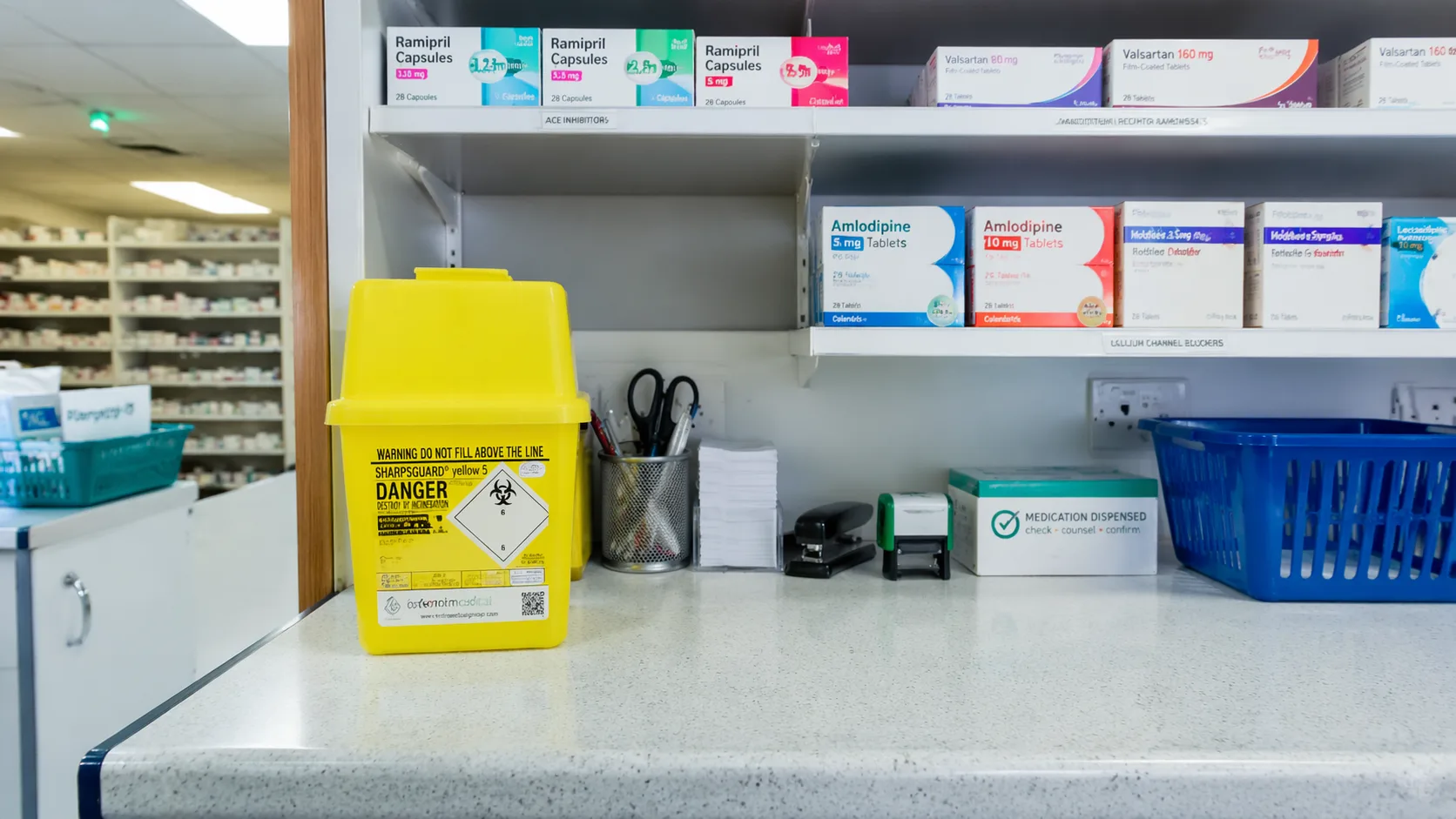
Safe disposal removes sharps from the clinical area and so reduces injury risk. Sharps bins must be correctly assembled, labelled, placed close to the point of use, kept out of reach of patients and children, and not positioned on the floor.
The correct container depends on the waste stream and the practice's waste contract. Dental sharps include needles, blades, files, burs, contaminated sharp instruments, and extracted teeth. Some sharps are contaminated with medicines, for example local anaesthetic. Teeth that contain amalgam require separate handling because amalgam waste must not be incinerated in the wrong stream.
Sharps bin safety checks
- Use the correct bin for the waste type and local policy.
- Do not overfill beyond the marked line.
- Use the temporary closure when the bin is not in active use.
- Never push items down into a sharps bin.
- Seal and label bins according to the practice procedure.
Patients sometimes ask to keep extracted teeth. Follow practice policy on cleaning, packaging and labelling, and give patients clear advice. If amalgam is present, ensure the patient understands the environmental disposal issue and that the item is labelled accordingly.
A sharps bin is an effective control only when it is correctly assembled, correctly placed and not overfilled.
Ask Dr. Aiden
Rate this page
Sign up now for a free account
Course tools & details

