

Welcome
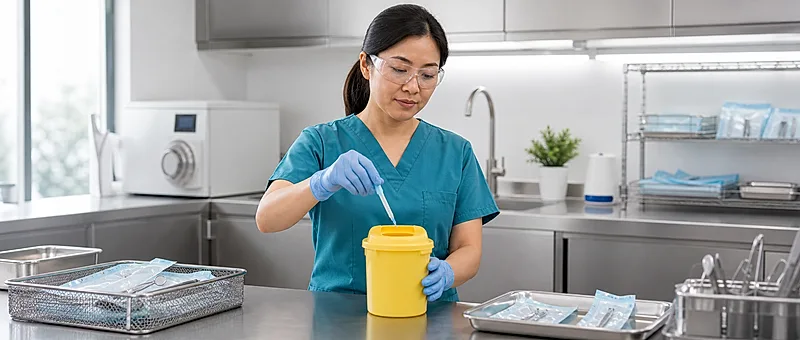
Sharps safety is an everyday part of dental nursing. Needles, burs, matrix bands, endodontic files, scalpel blades, suture needles, orthodontic wires and contaminated instruments can cause injury when workflows are rushed, roles are unclear, or equipment and disposal are poorly arranged.
This course is for dental nurses in general practice, community dentistry, specialist clinics and training settings. It covers preventing sharps injuries, safe chairside handling, correct disposal, decontamination risks, immediate first aid and post-exposure action, incident reporting, recordkeeping, and speaking up if shortcuts threaten staff or patient safety.
Why This Course Matters
- Sharps injuries are common enough to plan for: prevention and response must work reliably in a stressful moment, not depend on memory.
- Dental nurses are exposed across the pathway: chairside work, instrument transfer, decontamination, waste handling and recordkeeping all affect risk.
- Most injuries are preventable: using safer devices, arranging a clear layout, ensuring safe handovers and providing point-of-use disposal cut risk.
- Reporting protects everyone: prompt action supports the injured person and helps the practice learn and reduce future incidents.
How This Course Will Help You
The course follows the practical sharps pathway: recognising where risk arises, preventing injuries, using safer handling systems, disposing of sharps correctly, managing contaminated instruments, responding after an injury, and using records and policy to improve practice.
Rate this page
Sign up now for a free account
Course tools & details

