

Ladders, stepladders and safe low-level access
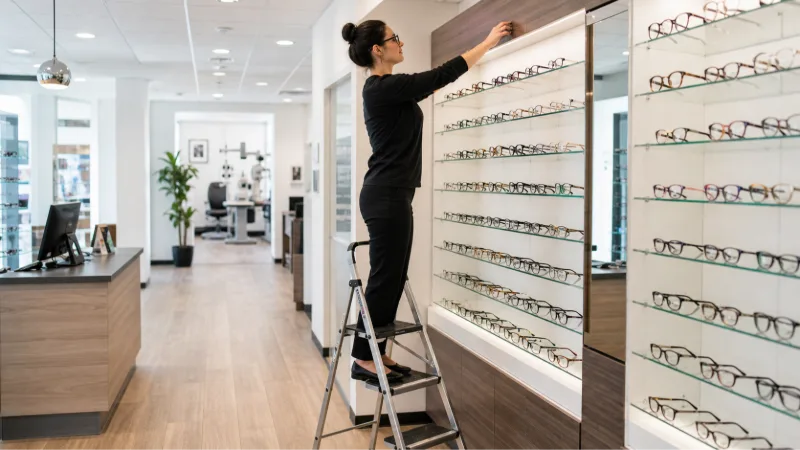
Low-height access still needs planning. In optical practice, staff may need to reach frame stock, display material, archived items, cleaning supplies, seasonal displays, signage or equipment stored above shoulder height. Even short tasks can lead to serious injury if done without safe equipment or attention to the surroundings.
Ladder Safety: Stepladders | WorkSafeBC
Video: 1m 6s · Creator: WorkSafeBC. YouTube Standard Licence.
Was this video a good fit for this page?
Before using steps or a ladder
- Check authorisation: use ladders or stepladders only if your role and local training allow it.
- Use proper equipment: do not stand on chairs, boxes, counters, shelves, swivel chairs, bins or unstable stools.
- Check the surface: the floor should be level, dry, stable and clear.
- Check the equipment: look for damage, missing feet, loose steps, contamination or anything that makes it unsafe.
- Avoid overreaching: climb down and reposition instead of stretching sideways.
- Think about the load: heavy or awkward items may need a different method or another person.
When to stop
Stop if the equipment is damaged, the floor is wet, the task is beyond your training, the item is too heavy or awkward, customers are close by, you feel rushed, or you need to lean, twist or overreach to finish the task.
If you need height, use the right equipment and the right person for the task. A chair, box or counter is not a stepladder.
Ask Dr. Aiden
Rate this page
Sign up now for a free account
Course tools & details

