

Stockrooms, displays, cables and equipment layout
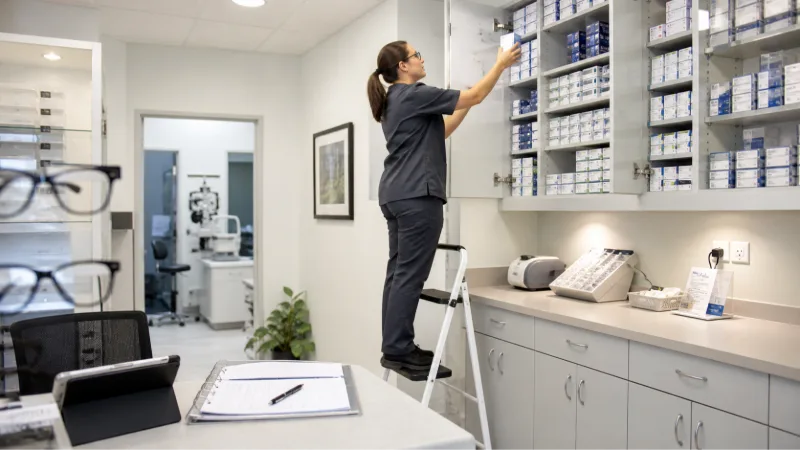
Small changes in stockroom and display habits create trip risks over time. A cable left "just for today", a box set down "for a minute" or a stool left in a route can become accepted unless someone addresses them.
Stock and storage hazards
- Deliveries: boxes must not block entrances, fire routes, consultation-room access, toilets or staff walkways.
- Storage height: avoid storing heavy or frequently used items where staff will be tempted to climb unsafely.
- Frame displays: drawers, trays, stools and promotional stands should not protrude into walking routes.
- Staff areas: provide designated space for coats, bags, cleaning equipment and packaging.
- Waste: flattened boxes, wrapping, lens packets and old display material should be removed promptly.
Cables and optical equipment
Practices commonly use pre-screening devices, OCT and fundus cameras, slit lamps, field screeners, card machines, tablets, display lighting, chargers and computers. Route cables away from walking paths where possible and avoid temporary runs. Temporary cables must be controlled and removed when the task finishes.
Do not accept a trip hazard for convenience. If equipment cannot be positioned safely, report it rather than using a risky workaround.
Temporary cable and storage workarounds become risky when they are treated as normal. If everyone has to step over it, the layout is not working.
Ask Dr. Aiden
Rate this page
Sign up now for a free account
Course tools & details

