

Understanding FGM
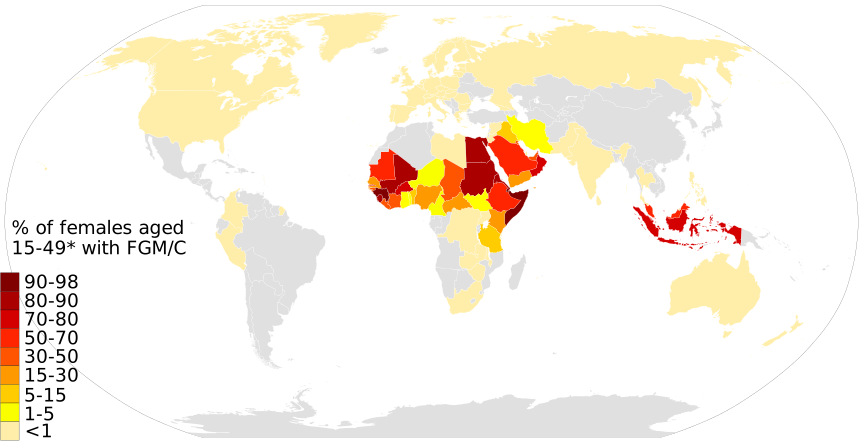
Female genital mutilation (FGM) describes procedures that partially or totally remove external female genitalia, or otherwise injure female genital organs, when there is no medical justification. It is a violation of human rights and can cause lasting physical, psychological and social harm.
Pharmacy clinical staff are regulated healthcare workers with statutory safeguarding duties. All members of a pharmacy team should know the definitions, classifications and context of FGM so they can identify disclosures or concerns and respond appropriately.
WHO Classification of FGM
The World Health Organisation (WHO) classifies FGM into four types:
- Type 1 (Clitoridectomy): Partial or total removal of the clitoral glans and/or the prepuce. [1]
- Type 2 (Excision): Removal of the clitoral glans and labia minora, with or without excision of labia majora. [1]
- Type 3 (Infibulation): Narrowing of the vaginal opening by creating a covering seal, formed by repositioning and stitching the labia minora or majora, leaving only a small opening. [1]
- Type 4: All other harmful procedures to female genitalia for non-medical reasons, including piercing, incising, scraping, or cauterising. [1]
Pharmacy staff should be able to recognise disclosures or signs that may require safeguarding action.

Prevalence and UK Context
Globally, about 200 million women and girls have undergone FGM, mainly in parts of Africa, the Middle East and Asia. Countries with high prevalence include Somalia, Guinea, Egypt and Sudan, where rates range from 80% to 98%. [2] In the UK, an estimated 137,000 women and girls live with the consequences of FGM, primarily in communities originating from those countries. [3]
Pharmacy teams may encounter patients from high-prevalence countries when dispensing prescriptions, selling over-the-counter medicines, or providing health advice.
Awareness of demographic and cultural prevalence aids in accurate identification, timely safeguarding interventions, and effective patient care.
Implications for Pharmacy Professionals
Pharmacy professionals do not usually provide direct clinical treatment for FGM but have statutory safeguarding responsibilities. Community pharmacists, pharmacy technicians, dispensers and counter staff may notice psychological or behavioural signs of distress during consultations at the counter or in a private room. Recognising these signs allows staff to follow safeguarding procedures, support vulnerable patients and refer appropriately. [4]
Ask Dr. Aiden
Rate this page
Sign up now for a free account
Course tools & details

