

PPE, skin care, and health surveillance
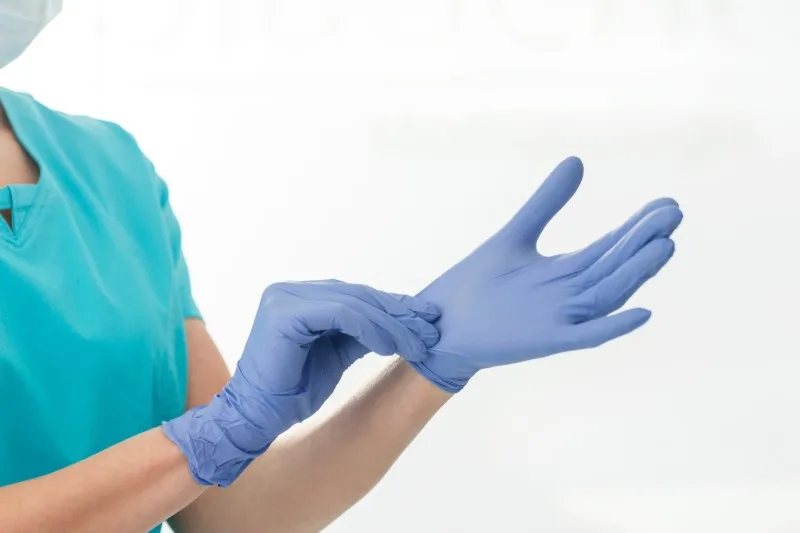
PPE may be needed under COSHH when other controls do not adequately reduce risk. It protects only while worn correctly and mainly protects the wearer. If PPE is the wrong type, damaged, poorly fitted, or contaminated, it may offer no protection.
Using PPE safely
- Use the right PPE for the task: care gloves, chemical-resistant gloves, aprons, eye protection, masks, and visors each protect against different hazards and are not interchangeable.
- Put it on and take it off correctly: removing contaminated PPE incorrectly can expose skin, eyes, clothing, and surfaces.
- Change PPE when needed: between residents, between tasks, when damaged, or when contaminated.
- Do not wear gloves unnecessarily: unnecessary glove use can spread contamination and increase skin damage.
- Use reusable PPE only as instructed: follow manufacturer guidance and local procedures for cleaning, storage, and replacement.
Skin care matters
Contact dermatitis is the most common work-related skin disease among nurses and other health and social care staff. Wet work, frequent handwashing, cleaning chemicals, biological agents, and glove use all increase the risk. Early signs such as dryness, cracking, soreness, itching, or rash should be reported.
- Wash contamination off promptly: especially after a chemical splash or contact with body fluids.
- Dry hands thoroughly: damp skin is more easily damaged.
- Use moisturising creams as advised: do not rely on a "barrier cream" to prevent chemical exposure.
- Report skin symptoms early: early review can prevent more severe dermatitis.
PPE only helps when it is suitable, worn correctly, and used alongside other controls. Skin symptoms and breathing problems are warning signs that COSHH controls may need review.
Ask Dr. Aiden
Rate this page
Sign up now for a free account
Course tools & details

