

Cleaning Instruments Safely
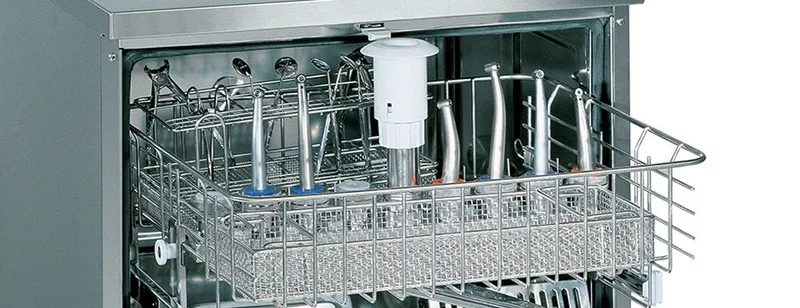
Cleaning removes visible contamination before sterilisation. Sterilisation will not make an instrument safe if blood, cement, debris, or tissue remains on it. Instruments with visible contamination require further cleaning before they can be returned to use.
Washer-disinfectors are preferred where available because they provide a controlled, validated process and reduce handling risk. Ultrasonic baths may be used where the SOP allows, usually as an adjunct or backup. Manual cleaning carries the highest risk to staff and should be used only when it is permitted by local procedure and the manufacturer's instructions.
Safe cleaning principles
- Follow the manufacturer's instructions for instruments and equipment.
- Do not overload baskets or block surfaces from being cleaned.
- Open hinged instruments where required by the process.
- Use approved detergents and appropriate water quality per the SOP.
- Inspect instruments after cleaning and return any dirty items for re-cleaning.
Dental handpieces require particular care because internal channels and moving parts can be damaged by incorrect processing. Lubrication, cleaning and sterilisation must follow the handpiece manufacturer's instructions and the practice procedure. Do not guess with complex or expensive instruments.
When manual cleaning is used
- Use only the approved sink, detergent, brushes and PPE.
- Keep instruments low in the water to reduce splashing.
- Clean away from the body and avoid hand contact with sharp working ends.
- Rinse, dry and inspect according to the SOP before the next stage.
Manual cleaning may be necessary for some items, but it is more variable and increases exposure to sharps and splash risk. If manual cleaning has become routine because equipment is broken, overloaded or unavailable, the practice must review the system rather than accept a permanent workaround.
If an instrument is not visibly clean, it is not ready for sterilisation.
Ask Dr. Aiden
Rate this page
Sign up now for a free account
Course tools & details

