

Decontamination and the Dental Nurse Role
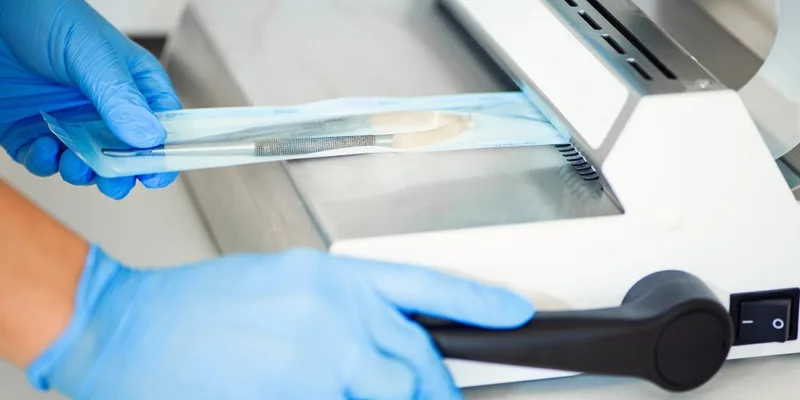
Decontamination makes reusable instruments safe for the next patient. It covers cleaning, inspection, packaging, sterilisation, storage and traceability. Disinfection reduces microorganisms to a safer level; sterilisation aims to eliminate viable microorganisms.
For dental nurses this involves professional responsibility for patient safety. If debris remains on an instrument, a pouch is damaged, a cycle has failed, or clean and dirty instruments mix, stop and correct the process before continuing patient care.
The working chain
- Contain and transport: move used instruments safely from the surgery to the decontamination area.
- Clean: remove visible contamination using the approved method for that item.
- Inspect: check instruments before sterilisation and remove damaged or dirty items from use.
- Sterilise and store: use validated cycles, correct packaging and storage, and clear traceability records.
- Escalate: report failures, repeated defects, equipment faults, sharps injuries, or unclear SOPs promptly.
Consistency is essential. A busy diary, a late-running surgery or pressure from a colleague does not justify skipping checks. Use calm, factual language: "I can still see debris, so this needs to go back through the process" or "I am not confident this load can be released until we check the record."
Know which items are reusable, single-use, or single-patient use. Do not reprocess single-use items for another patient. If packaging, labelling or manufacturer instructions are unclear, stop and check rather than relying on habit.
Decontamination is complete only when the whole approved process has been followed, checked, and recorded where required.
Ask Dr. Aiden
Rate this page
Sign up now for a free account
Course tools & details

