

Inspection, Packaging, and Sterilisation
After cleaning, inspect instruments before sterilisation. This safety check identifies debris, rust, damage, corrosion, loose joints, worn working ends, missing parts, or any item that must be repaired, replaced, or taken out of use.
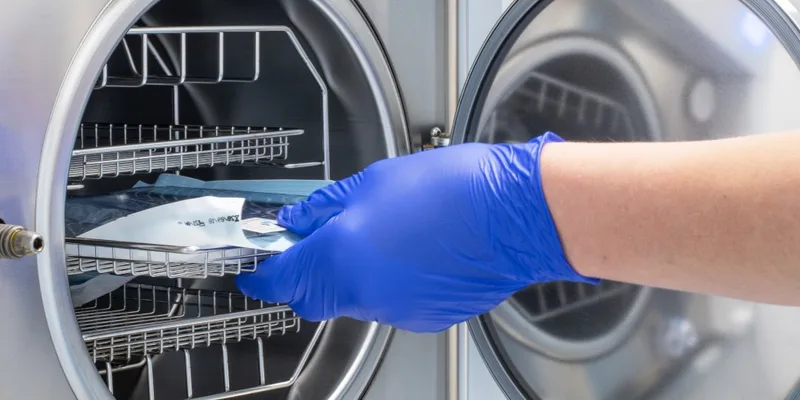
Use packaging appropriate for the sterilisation method and for storage. Seal pouches correctly, avoid overfilling, and discard damaged packaging. Load autoclaves following the manufacturer's instructions and the practice SOP so steam can reach instrument surfaces and the cycle can run effectively.
Before releasing a load, check
- The correct cycle was selected for the load and steriliser type.
- The cycle completed successfully and any indicators or records are acceptable.
- Items are dry where required and packaging is intact.
- Traceability information is recorded according to local policy.
- Failed, wet, damaged, or questionable items are not released.
Different sterilisers - non-vacuum, vacuum, and others - have different permitted uses and loading rules. Dental nurses do not need engineering detail, but must follow the practice SOP for the specific equipment and speak up when a load, pouch, test, or record appears incorrect.
A failed or questionable cycle is not a judgement call to smooth over. It is a process failure that needs the agreed response.
Ask Dr. Aiden
Rate this page
Sign up now for a free account
Course tools & details

