

How infection spreads in optical practice
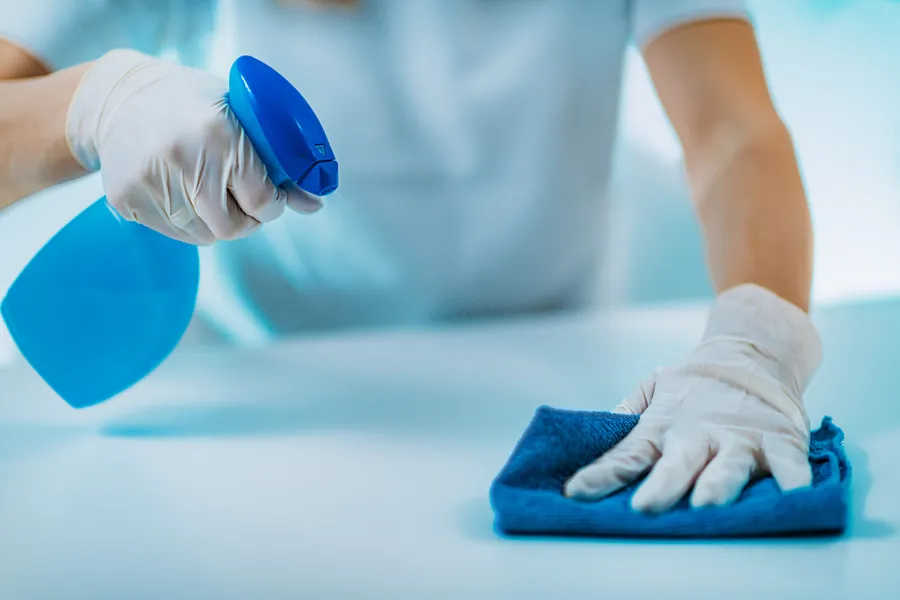
Infections spread when germs move from a source to another person by a route that lets them enter the body. In optical practice, the common routes are hands, respiratory droplets, contaminated surfaces, shared equipment, tissues, waste and close face-to-face work.
2 Preventing the spread of infection
Simple definitions
- Cleaning: physically removing dirt, grease, dust and contamination from a surface or item.
- Disinfection: reducing harmful microorganisms on a surface or item using an approved method or product.
- Decontamination: making an item or area safer to handle or use. This may involve cleaning and, where required, disinfection.
- Sterilisation: destroying or removing all viable microorganisms, including spores. This is not routine environmental cleaning in optical practice.
Optical examples
A customer tries on several spectacle frames, touches their eye, uses the card terminal and hands paperwork to reception. Another patient rests their chin and forehead against diagnostic equipment. A staff member wipes a surface, then touches the keyboard and telephone. Each action can transfer contamination if hand hygiene and cleaning are inconsistent.
Standard precautions reduce risk because staff cannot always know who is infectious.
The practical question is not "Did we wipe it?" but "What contamination risk exists, what method is required, and has the item been made safe for the next person?"
Ask Dr. Aiden
Rate this page
Sign up now for a free account
Course tools & details

