

Welcome
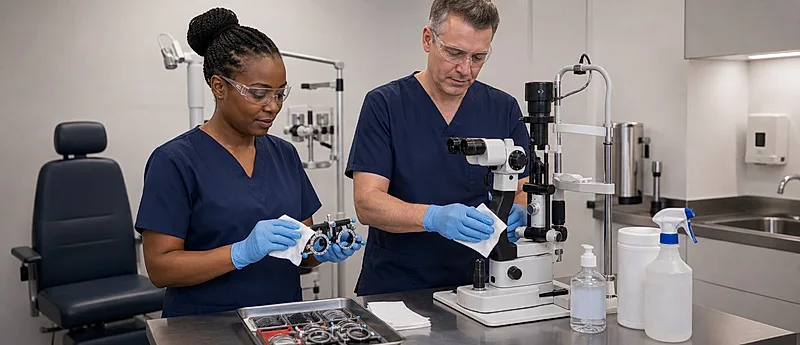
Infection prevention, cleaning and decontamination in optical practice are routine safety duties. They reduce the spread of infection via hands, shared surfaces and equipment, respiratory droplets, waste and inefficient workflows, protecting patients, visitors and staff.
About this course
This course is for optical assistants, reception and admin staff, retail and temporary staff, practice managers and other members of the optical team. It is written for support staff and focuses on practical routines, role boundaries, when to escalate concerns, and following local procedures. It does not require learners to diagnose eye disease, decide treatment or set clinical decontamination methods for specialist contact devices.
The course is UK-wide. Day-to-day principles are similar across the UK, but you must follow your employer's procedures, manufacturer instructions, the national IPC manual and any local health board or public health guidance where you work.
Why this course matters
- Optical work is close contact: staff handle frames, devices, cards, records and customer items while patients may also touch their face, eyes and spectacles.
- High-touch surfaces are everywhere: reception counters, card machines, pens, trial frames, dispensing tools, chin rests, head rests, keyboards, tablets, doors and toilets can all be part of a transmission chain.
- Cleaning words can be misunderstood: routine wiping is usually cleaning, sometimes disinfection, and almost never sterilisation.
- Support staff often spot risks first: a patient with sticky tissues, an unclean trial frame, an empty soap dispenser or an incomplete cleaning log may be noticed by non-clinical staff before clinical colleagues.
- Role boundaries keep people safe: support staff should escalate possible infection concerns to a registrant or manager rather than making clinical decisions alone.
How this course will help you
By the end of the course you will know when to use hand hygiene and PPE, how to clean and decontaminate routine areas and equipment as instructed, how to separate clean and contaminated tasks where possible, when to escalate situations, and how to report cleaning failures, exposure incidents or outbreak concerns promptly.
Rate this page
Sign up now for a free account
Course tools & details

