
Learning Disability Awareness for GP Receptionists and Care Navigators

Accessible first contact, adjustments and safe support for patients with a learning disability

  • Reputation

    No token earned yet.

    Reach 50 points to earn the Peridot (Trainee Level).

  • CPD Certificates

    Certificates

    You have CPD Certificates for 0 courses.

  • Exam Cup

    No cup earned yet.

    Average at least 80% in exams to earn the Bronze Cup.

Launch offer: Certificates are currently free when you create a free account and log in. Log in for free access

Avoiding diagnostic overshadowing
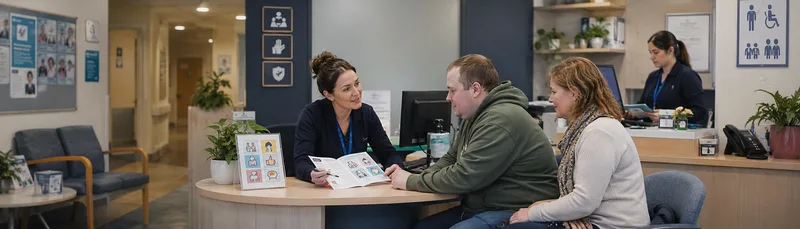
Reception desk conversation between staff and patients

Diagnostic overshadowing is when a new health problem is wrongly attributed to a person's disability. Reception staff do not diagnose, but they can ensure new concerns are passed on and not dismissed.

Take new concerns seriously

A person with a learning disability may show illness differently. Pain, infection, medication side effects, distress, constipation or dehydration can appear as changes in behaviour, withdrawal, agitation or repeated contact.

Reception staff should record the exact words used and the specific changes observed, rather than labelling them simply as "behavioural". If a carer reports the patient is "not themselves", record that detail.

14 Recognising deterioration in people with a learning disabilities

Video: 2m 56s · Creator: NHS England Workforce, Training and Education. YouTube Standard Licence.

This NHS England Workforce, Training and Education video explains why recognising deterioration can be harder for people with a learning disability or autism who may not be able to describe how they feel. It focuses on sepsis and infection, noting that early signs can be vague and that people with learning disabilities have shorter life expectancy and higher risk of death from infections such as pneumonia or sepsis.

The video gives examples of increased infection risk: swallowing difficulties leading to chest infections, constipation contributing to urinary tract infections, and difficulty accessing fluids or toilets when needed.

It advises carers and staff to notice soft signs of deterioration, because subtle behaviour change may be the first or only sign of illness. Suggested prevention includes supporting safe eating where swallowing is difficult, helping with toileting, encouraging dental care, promoting hydration and immunisations, and asking a manager or senior colleague for advice when concerned.

Was this video a good fit for this page?

Listen for change

  • New confusion, drowsiness, pain or distress.
  • Sudden change in eating, drinking, toileting or mobility.
  • Repeated contact where the plan is not working.
  • Carer concern that this is not normal for the patient.

Do not let a known learning disability hide a new health or safety concern.

When the concern is new or different from usual, keep the details and pass them to the appropriate clinical route instead of explaining it away at reception.

Illness can present as behaviour change, reduced communication or withdrawal. Recording what is different from the person's usual presentation gives clinicians more useful information than labels such as "agitated" or "difficult".

Diagnostic overshadowing can start with language. Recording a new symptom merely as "behaviour" risks missing clinical significance. Factual descriptions protect the patient.

Scenario

A carer says, "He is usually chatty, but today he is curled up and not drinking."

What should staff do?


Ask Dr. Aiden


Rate this page


Course tools & details Study tools, course details, quality and recommendations
Funding & COI Media Credits
