

Safeguarding, distress and unsafe access
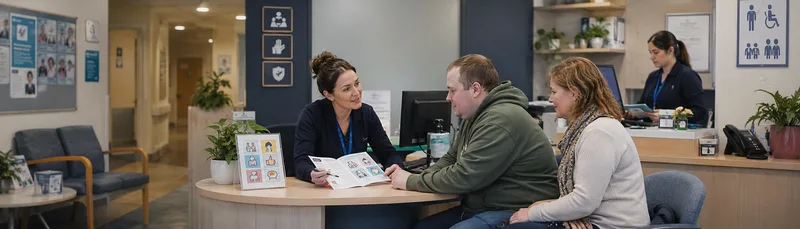
People with learning disabilities can be at increased risk of abuse, neglect, exploitation or undue control. Safeguarding concerns may become apparent during routine contacts at reception.
Possible safeguarding clues
Be alert if someone controls the patient's phone, money, appointment access or documents; if the patient appears frightened of a supporter; if explanations change frequently; or if missed care repeatedly causes harm.
Distress can also come from services that are hard to use. A patient who becomes upset may be overwhelmed, misunderstood or unable to follow the route offered. Staff should stay calm and escalate if there is risk.
Respond safely
- Do not confront a suspected abuser at the desk.
- Do not promise secrecy.
- Record facts and the patient's exact words.
- Use safeguarding, urgent clinical or emergency routes when needed.
Safeguarding concerns should be reported; reception staff do not need proof before raising a concern.
If the patient cannot speak freely, find a safe way to pass the concern on using local safeguarding or urgent routes.
Communication needs can make safeguarding harder to spot. Take partial disclosures seriously and avoid letting another person control the conversation when that may increase risk.
Concerns may be subtle. A patient might not say "abuse" or "exploitation" but could say they are not allowed to speak, do not control money, or are frightened of upsetting someone.
Ask Dr. Aiden
Rate this page
Sign up now for a free account
Course tools & details

