

Common slip and trip hazards
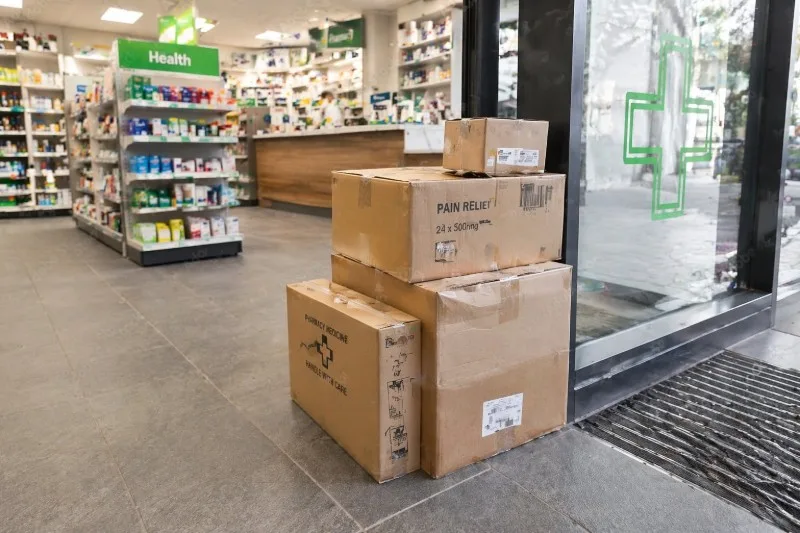
In pharmacy environments, many slip and trip hazards are everyday items or conditions that have been overlooked, left in place, or ignored during busy periods. Floors, walkways, entrances, storage areas and back-room routes become unsafe when hazards are not noticed and dealt with promptly.
What every team member should know
- Watch for contamination: spillages, tracked-in rainwater, cleaning residue, powders and loose packaging all increase slip risk.
- Keep walkways clear: stock, tote boxes, delivery cages, waste, bags and trailing cables must not be left where people walk.
- Notice changing conditions: a route that was safe earlier can become unsafe after a delivery, during cleaning or in bad weather.
- Act or report promptly: if you can make the area safer immediately, do so. If not, report it and prevent others from walking into the hazard.
Slip and trip risks extend beyond the public area. Dispensaries, stockrooms, staff corridors, stairs and rear entrances often present hazards, especially when staff are moving quickly or carrying items.
Most slip and trip hazards are easier to control before someone is hurt. Notice them, deal with them when you can, and do not assume they can wait until later.
Ask Dr. Aiden
Rate this page
Sign up now for a free account
Course tools & details

