

Welcome to GOC Standard 15: Sexual Harassment in Optical Practice
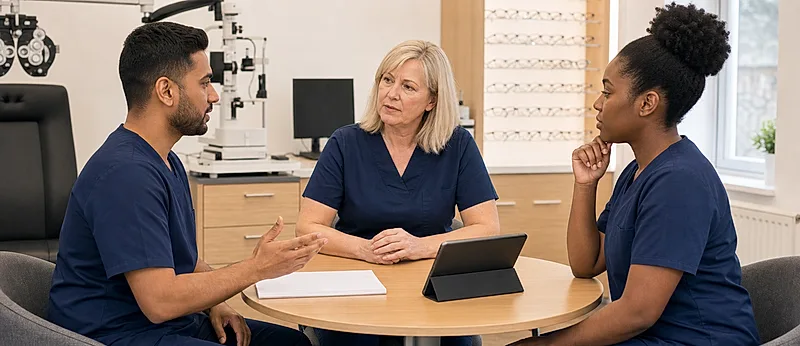
Welcome - and thank you for committing to this important CPD course. This programme is designed to help optical teams prevent, recognise and respond to sexual harassment in clinical and mixed retail settings, in line with GOC Standard 15. You will learn practical, proportionate and legally informed approaches that protect both colleagues and patients while supporting a zero‑tolerance culture.
What you will learn
- Clear definition of sexual harassment and the legal/regulatory context (Equality Act 2010, H&S duties, GOC standards, potential criminal offences and vicarious liability).
- How harassment may present in optical practice: verbal, non‑verbal, physical and digital behaviours - and why a single serious incident can meet the threshold.
- Immediate, safe response steps to protect people and preserve care (Stop / Support / Signal / Secure / Schedule).
- What robust, contemporaneous documentation looks like and what will stand up in investigations.
- Reporting routes, investigation principles and how to carry out proportionate, impartial inquiries.
- Practical environmental and administrative controls (chaperones, room layout, signage, call systems).
- Scripts, micro‑behaviours and training approaches to equip front‑line staff and leaders.
- Managing consent, relationships and power imbalances in clinical settings.
- Post‑incident support, reintegration and measures to reduce secondary trauma.
- Governance, metrics and continuous improvement to turn learning into lasting cultural change.
- Special considerations for domiciliary visits, contractors, students and visiting clinicians.
Key takeaways: sexual harassment is defined by impact not intent; act quickly to set boundaries and secure evidence; document facts contemporaneously; offer trauma‑informed support; use governance to learn and prevent recurrence.
Why this matters
Sexual harassment undermines dignity, safety and trust. Optical practice contains specific risk factors - close contact, dim rooms, one‑to‑one consultations, mixed clinical‑retail environments and domiciliary visits - that increase vulnerability for staff and patients. Compliance with GOC Standard 15 is not only a professional duty but essential for protecting wellbeing, reducing organisational risk and meeting legal obligations.
How this course will help you in practice
- Equip you to recognise subtle and overt forms of harassment and apply the "reasonable person" test in context.
- Give you short, usable scripts and role‑play scenarios to stop inappropriate behaviour calmly and safely.
- Provide documentation templates and checklists that capture Who/What/When/Where/Witnesses and preserve evidence correctly.
- Show clear reporting pathways (internal and external) and how to manage investigations with impartiality and proportionality.
- Help you design practical controls - chaperone offers, sightlines, signage and escalation routes - to reduce recurrence.
- Support leaders in measuring culture, tracking leading and lagging indicators, and closing the learning loop.
Who should take this course
- Optometrists and dispensing opticians
- Practice managers, HR and safeguarding leads
- Reception and clinical support staff
- Domiciliary clinicians and students on placement
- Any colleague responsible for governance, safety or staff wellbeing
Course format and practical resources
- Scenario‑based modules reflecting real optical practice situations
- Short scripts and micro‑behaviour prompts for front‑line use
- Documentation and investigation templates (quick checklist and incident note formats)
- Guidance on evidence handling, privacy and retention
- Checklists for immediate action, investigation closure and reintegration
- Self‑test revision prompts to consolidate learning
How to get the most from this course
- Practice the short scripts aloud and run brief team role‑plays or huddles.
- Print or store the quick action and documentation checklists for easy access.
- Discuss your practice's current chaperone, room layout and escalation arrangements and plan small, immediate improvements.
- Use the provided templates to update incident recording and investigation files; ensure separation of clinical notes and HR records where appropriate.
- Share de‑identified learning points at team meetings and track actions to closure.
After completion
- You will be better able to prevent and respond to sexual harassment, document proportionately and support everyone involved.
- Use your CPD evidence to update local policies, staff induction and governance records.
- Implement at least one practical change (e.g. chaperone signage, a documentation template or a rota adjustment) and measure its effect as part of continuous improvement.
We're pleased you've chosen to take this course. By learning these practical, evidence‑based steps you will help create safer, more respectful environments for patients and colleagues - and make your practice more resilient and professionally compliant. Welcome aboard.
Sign up now for a free account
Course tools & details

