

Cleaning, disinfection, decontamination, and standard precautions
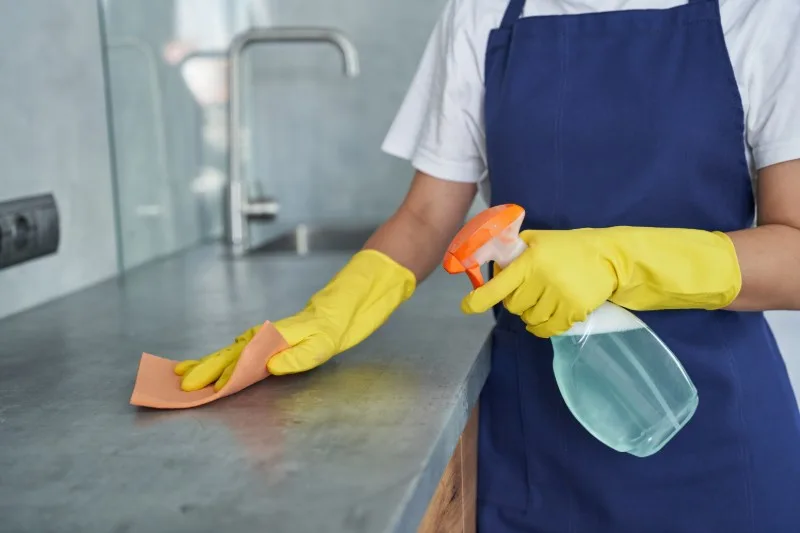
Cleaning, disinfection and decontamination are distinct actions. In community pharmacy practice, routine infection prevention depends mainly on correct cleaning and standard precautions rather than hospital-style sterilisation.
Simple definitions for pharmacy practice
- Cleaning: the physical removal of dirt, residues and contamination from a surface or item. This is the first step for safer practice and is usually sufficient for routine environmental cleaning.
- Disinfection: reducing harmful microorganisms on a surface or item. It does not render an item sterile.
- Decontamination: processes used to make an item or area safer to handle or use. In pharmacy this commonly means cleaning and, where indicated, disinfection.
- Sterilisation: killing all microorganisms, including spores. This is not the routine aim of community pharmacy environmental cleaning and should not be confused with surface hygiene.
Standard precautions are the real spine
The NIPCM for England sets out standard infection control precautions to be used by all staff, in all care settings, at all times, whether infection is known or not. For pharmacy teams, the most relevant day-to-day measures are hand hygiene, respiratory hygiene, appropriate use of PPE, safe management of the care environment and equipment, correct waste disposal, and handling spillages and occupational exposures.
A pharmacy does not need to look like an operating theatre to require infection prevention discipline. Consider which parts of the workflow could become contaminated and which routine actions prevent spread to the next person, surface, device or task.
The safest everyday pharmacy mindset is not "What kills everything?" but "What needs routine cleaning, what needs disinfection, and which standard precaution prevents contamination spreading from here?"
Ask Dr. Aiden
Rate this page
Sign up now for a free account
Course tools & details

