

High-risk areas and high-touch items in the pharmacy
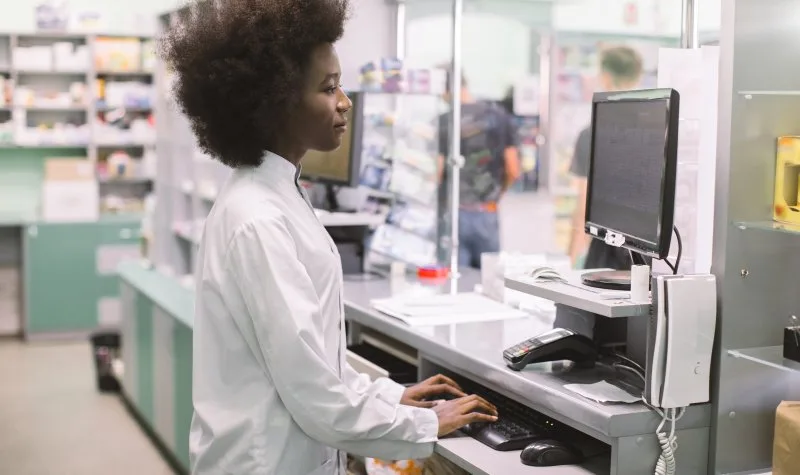
A pharmacy may look tidy while still posing an infection risk. High-touch surfaces are often missed because they are part of everyday workflow rather than recognised clinical equipment.
Common pharmacy high-risk points
- Public-facing touchpoints: counter ledges, card terminals, baskets, hatch handles, pens, seats, queue screens, and consultation-room door handles.
- Dispensary and office touchpoints: dispensing benches, PMR terminals, keyboards, mice, telephones, printers, label printers, fridge handles, and cupboard handles.
- Clinical service areas: consultation tables, chair arms, blood pressure monitors, cuffs, stethoscopes, and any reusable diagnostic accessories.
- Special workflow areas: monitored dosage system stations, methadone measuring areas, returns bins, waste holding points, and delivery bags or cold-chain boxes if used repeatedly.
Why these areas are missed
Contamination spreads through routine actions: a staff member touches a keyboard after handling a used cuff, reaches for a phone after unpacking returned medicines, or moves stock and then handles a patient's paperwork. Infection prevention breaks down when the actual sequence of touches in daily tasks is not mapped.
Identify local high-touch surfaces and include them in cleaning schedules. Anything that moves between staff and patients, or between public and staff-only zones, needs a specific cleaning plan.
If a surface, handle, device, bag, or keyboard is touched repeatedly by staff or patients, assume it needs a deliberate cleaning plan rather than occasional attention.
Ask Dr. Aiden
Rate this page
Sign up now for a free account
Course tools & details

