

Occupational exposure, sharps, and staff health
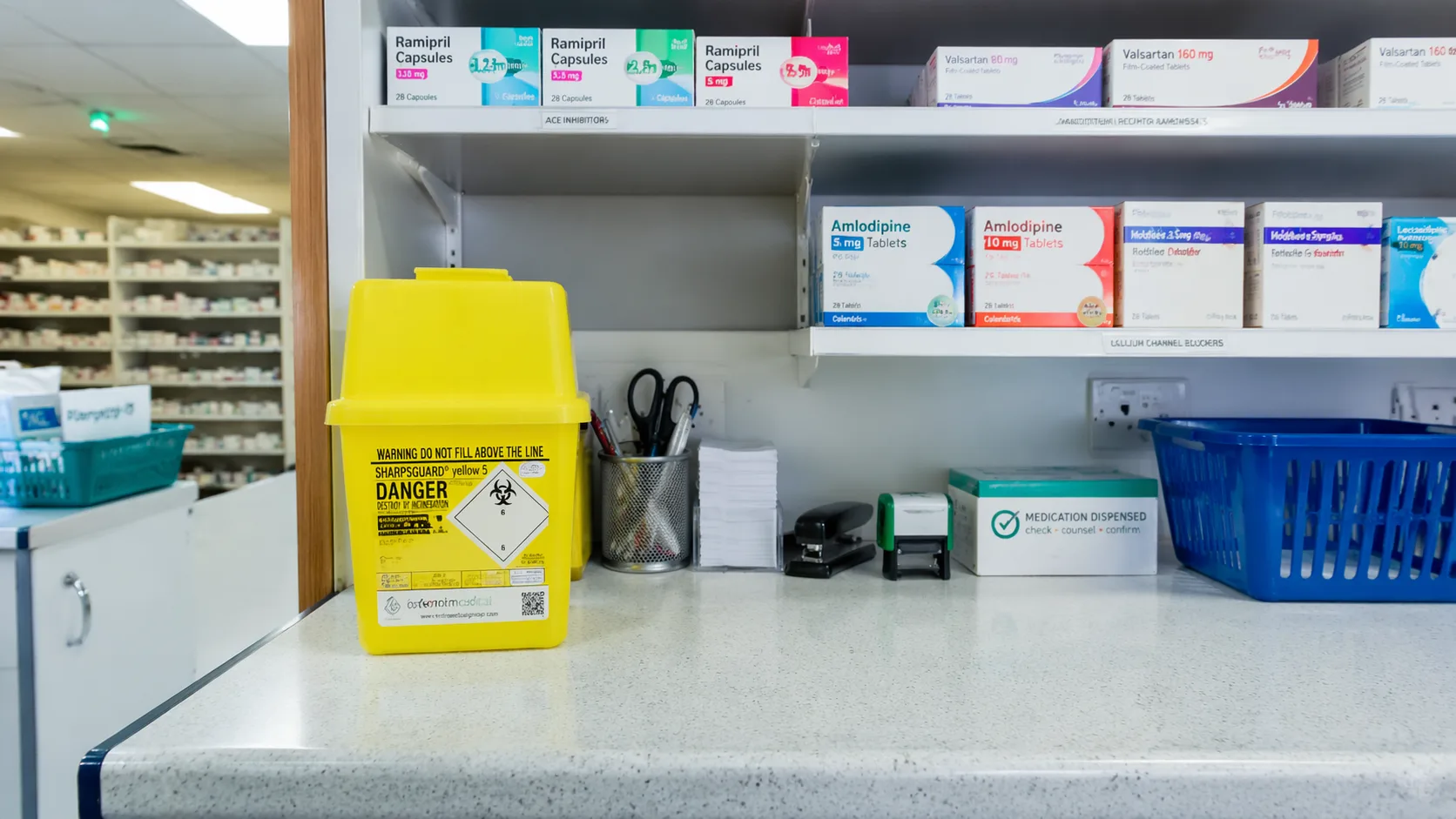
Pharmacies that provide vaccinations, finger-prick testing, or other services with risk of blood or body-fluid exposure must have clear procedures for what counts as a significant exposure, how to give immediate first aid, who to notify without delay, and how staff health measures such as Hepatitis B vaccination are handled in local risk assessments.
What counts as a significant occupational exposure?
The NIPCM for England describes significant occupational exposure as including:
- percutaneous injury: for example a needlestick, lancet injury, or other sharp that breaks the skin
- exposure of broken skin: for example blood or other high-risk body fluid getting onto cuts, abrasions, or eczema
- mucous-membrane exposure: for example a splash to the eyes or mouth
In community pharmacy the most obvious risks are vaccination needles, lancets, and splashes during testing or spills. Teams should also consider unsecured sharps, poorly packed returns, and cleaning up incidents without appropriate equipment or training.
What to do immediately
Local procedures must be followed, but staff should know the basic first aid steps:
- for skin puncture or other skin exposure: encourage the wound to bleed gently, do not suck the area, and wash or irrigate with warm running water and plain soap
- for eye or mouth exposure: rinse or irrigate copiously with water straight away; if contact lenses are worn, irrigate, remove the lenses, and irrigate again
- dispose of the sharp safely: or make the area safe for the trained person managing the incident
- report the incident immediately: do not wait until the end of the shift
Who to tell and what should happen next
Every pharmacy offering vaccination or testing services should have a clear local route for immediate reporting. That route may be the responsible pharmacist, line manager, superintendent, occupational health service, commissioner-required escalation, or urgent assessment such as A&E. Staff should not have to guess who to contact.
Record the incident promptly. The record should state what happened, what first aid was given, what body fluid or device was involved if known, who was informed, and what follow-up advice or assessment was arranged. Report near misses so unsafe sharps handling or poor layout can be corrected before an injury occurs.
Staff health and Hepatitis B vaccination
NHS England Midlands' community-pharmacy IPC top tips advise that relevant staff should be offered Hepatitis B vaccination, especially those performing finger-prick testing and vaccinations. Offer should be based on role and local risk assessment, not assumed for every member of staff.
Pharmacies should make sure staff know:
- whether their role carries regular exposure risk
- how to access occupational health or equivalent advice
- what the local post-exposure route is if an incident happens
- how sharps injuries, splash exposures, and near misses are reported and reviewed
Delivery staff and counter staff may not routinely handle sharps, but they should know not to improvise if they find a loose sharp, leaking test kit, or a visibly contaminated bag. Stop, make the area safer if you can without extra risk, and escalate according to local procedure.
If your pharmacy provides vaccination or finger-prick services, every relevant team member should know the sharps-injury and splash-exposure procedure before the incident happens, not while they are bleeding at the sink.
Ask Dr. Aiden
Rate this page
Sign up now for a free account
Course tools & details

