

Dispensing bench hygiene, reusable equipment, and avoiding cross-contamination
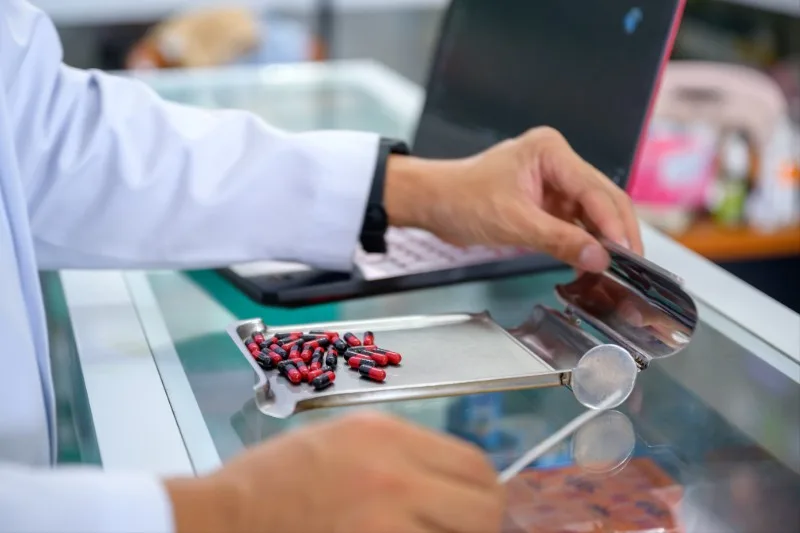
The dispensing bench should be a controlled work surface. Contamination can spread via residues, routine handling, reusable items, and poor separation between clean and contaminated workflows.
Bench hygiene basics
- Keep the bench clear: clutter hinders cleaning and raises the risk of cross-contamination.
- Separate clean and contaminated workflow: patient-returned medicines, spill kits, and visibly contaminated items must be kept out of normal dispensing flow.
- Clean surfaces routinely and after contamination events: pay particular attention where dusty tablets, broken capsules, creams, liquids, or shared equipment are handled.
- No food or drink in dispensing areas: this prevents contamination of medicines and surfaces.
Reusable equipment in pharmacy
The NIPCM requires reusable non-invasive care equipment to be decontaminated between patients using an approved method and in line with manufacturer instructions, then stored clean and dry. In pharmacy this includes items such as blood pressure monitors and cuffs, stethoscopes where used, counting trays, measuring devices, compliance aid equipment, and some consultation-room accessories.
Cleaning protocols should specify the frequency, method, and responsible person. When items are sent for servicing or repair, local arrangements may require confirmation that they have been cleaned first.
Cross-contamination risks that pharmacy teams overlook
- Dusty tablets and split capsules: powder can transfer to trays, benches, fingers, and other packs.
- Creams, ointments, and liquid medicines: leaks and smears can contaminate labels, baskets, and nearby surfaces.
- Methadone or measuring areas: measuring equipment and surrounding surfaces need scheduled cleaning within the workflow.
- Hazardous or higher-risk medicines: handling cytotoxics, hormones, or other higher-risk drugs may require extra COSHH and SOP controls beyond general IPC.
Clean workflow in pharmacy depends on keeping reusable equipment, work surfaces, and medicine handling areas free from residues and separated from contaminated items.
Ask Dr. Aiden
Rate this page
Sign up now for a free account
Course tools & details

