

Recording exact words and safe handover
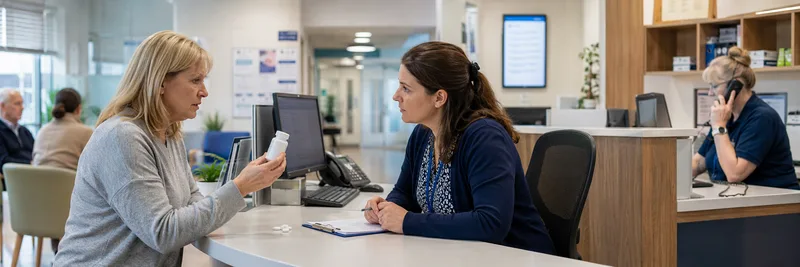
Clear records and handover let the next clinician or pharmacist assess risk without making the patient or caller repeat details. Vague notes can hide urgency; factual records support safer decisions.
Notes should record what was said, which medicine is involved if known, when the problem occurred, whether symptoms are present, what action was taken, and who accepted responsibility. The aim is not a long story but a concise account someone else can act on.
What to record
- Exact words: the patient's, caller's, pharmacy's, care home's or online request wording wherever possible.
- Medicine details: name, strength, dose, quantity, supply status or instruction problem if known.
- Timing: when the medicine was last taken, missed, doubled, stopped, started or changed where relevant.
- Symptoms now: record what is said or seen, without interpreting the cause.
- Patient context: age, pregnancy status, vulnerability, care-home involvement or carer support where relevant.
- Action and ownership: who was alerted, what route was used, and who accepted responsibility for the next step.
Make handover usable
A safe handover is specific. "Patient with epilepsy says no levetiracetam left, last dose taken this morning, prescription queue three days, mobile number confirmed, duty clinician alerted at 10:14" is far more useful than "medication request".
Record refusals, uncertainty, failed call-backs, disconnections, online delays or if a patient leaves before escalation is complete. These details affect what happens next and must be visible in the notes.
Why Documentation Matters – Catherine Gaulton
If the medicines issue sounded urgent when it was reported, it should still look urgent in the record.
Ask Dr. Aiden
Rate this page
Sign up now for a free account
Course tools & details

