

Urgent routes for medication queries
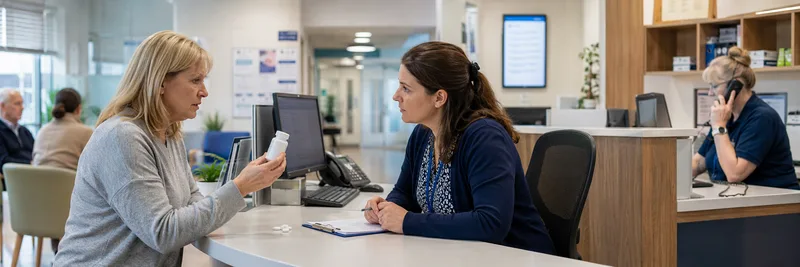
Urgent medication concerns must reach the person or service who will take responsibility. Depending on the situation this may be the duty clinician, practice pharmacist, community pharmacy urgent supply route, NHS 111, 999, a hospital or specialist team, palliative care, maternity services, or safeguarding support.
The receptionist's role is to activate the correct route, not to decide clinical treatment. Local protocols should state which contacts can follow routine prescription processing and which require immediate escalation.
Common escalation routes
- Duty clinician or practice pharmacist: for urgent medicines decisions within the practice when local protocol directs this.
- Community pharmacy or urgent supply route: where local arrangements allow temporary access to repeat medicines.
- NHS 111 or local urgent care: when the practice route is unavailable or symptoms need urgent assessment.
- 999: for suspected life-threatening reactions, severe overdose, collapse, severe breathing difficulty or other emergency presentations.
- Hospital, specialist, maternity or palliative care teams: when the condition or medication is managed by a specialist service.
- Manager, safeguarding or senior support: when there is refusal, vulnerability, conflict, unclear ownership or failed contact.
Do not let the route stall
Escalation must result in someone taking ownership. A message left unread in a prescription task list, a pharmacy query sitting in a routine inbox, or an online request with urgent wording may not trigger a timely response.
Near closing time is high risk. If the issue cannot safely wait until the next prescription run, staff must use the urgent route and a clear backup.
Escalation is only safe when the medicines issue has a clear owner and urgent wording has not been left in a routine queue.
Ask Dr. Aiden
Rate this page
Sign up now for a free account
Course tools & details

