

Understanding medication risk at first contact
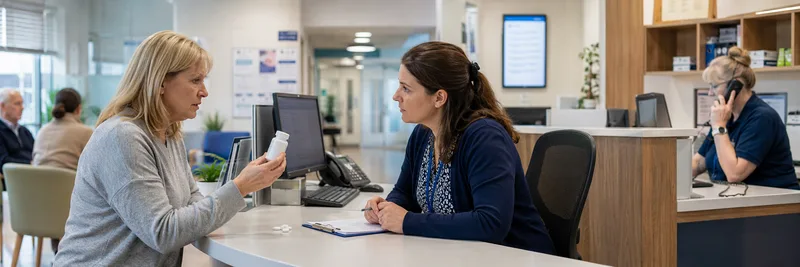
Not all medication contacts are routine repeat-prescription requests. A call or face-to-face enquiry may involve a missed critical medicine, a dosing error, a severe reaction, a change after hospital discharge, or a patient seeking clinical advice from reception.
Reception staff are not expected to judge clinical danger. Instead they must identify situations that need a clinical route: for example, when someone has no anti-seizure medication left, a child has been given an adult dose, or a caller reports swelling and breathing difficulty.
What makes a medication query higher risk
- The medicine may be time-critical: missed or delayed doses can harm people with some conditions.
- The patient may already be symptomatic: bleeding, breathing difficulty, confusion, collapse or severe pain increase urgency.
- The medicine instructions may be unclear: discharge summaries, hospital letters or pharmacy notes can create confusion.
- The patient may be vulnerable: children, frail adults, pregnant people and those who need help with medicines are at higher risk.
- The caller may ask for clinical advice: requests to change a dose, manage side effects or stop a medicine require clinical ownership.
Keep the question practical
The practical question is not "What should the patient take?" It is "Can this be processed routinely and safely?" If the answer is no, or there is uncertainty, follow the local escalation route.
At first contact collect: the caller's exact words, the medicine name if known, what happened and when, whether symptoms are present, the patient's location, contact details, and whether urgent help has already been sought.
Medication query safety is about recognising when routine processing is unsafe, not deciding the clinical medicine answer.
Ask Dr. Aiden
Rate this page
Sign up now for a free account
Course tools & details

