
Medication Query Red Flags for Reception and Admin Staff

Reception awareness for urgent medicines interruptions, errors, side effects and safe escalation

  • Reputation

    No token earned yet.

    Reach 50 points to earn the Peridot (Trainee Level).

  • CPD Certificates

    Certificates

    You have CPD Certificates for 0 courses.

  • Exam Cup

    No cup earned yet.

    Average at least 80% in exams to earn the Bronze Cup.

Launch offer: Certificates are currently free when you create a free account and log in. Log in for free access

Wrong dose, overdose and medicine errors
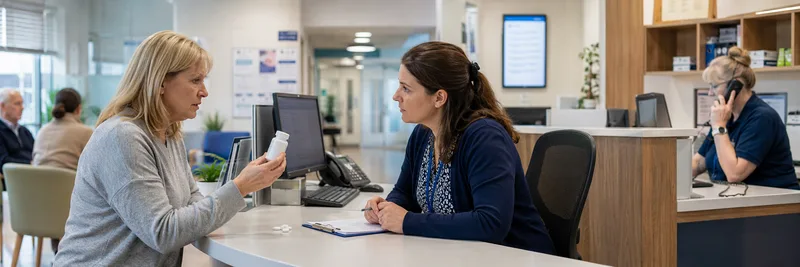
Two women talking at GP reception desk

Contacts about wrong medicine, wrong dose, double dosing or overdose require prompt action. Depending on the situation the patient may need urgent clinical assessment, poison advice, pharmacy input, emergency care or monitoring.

Reception staff must not judge whether an amount taken is safe. Preserve the caller’s wording and escalate the contact through your local process.

Listen or look for

  • "I took too many", "double dose", "wrong strength" or "wrong tablet".
  • Wrong medicine supplied, dispensed, administered or taken.
  • A child taking an adult medicine or adult dose.
  • A frail adult, care-home resident or person with learning disability affected by a medicine error.
  • Overdose with drowsiness, confusion, vomiting, collapse, breathing difficulty or self-harm concern.
  • Anticoagulant, insulin, opioid, sedative or other high-risk medicine error.

Keep the facts clear

Collect: medicine name, strength, amount taken, time taken, who took it, the person’s age or vulnerabilities, current symptoms, and whether emergency services, NHS 111, a pharmacy, poison services or another clinician have already been contacted.

Do not tell the patient to skip, repeat, reduce or increase the next dose unless that instruction comes from an approved clinical route.

Scenario

A parent says a child was given an adult dose by mistake.

What should the receptionist do?

How To Treat Poisoning, Signs & Symptoms - First Aid Training - St John Ambulance

Video: 1m 47s · Creator: St John Ambulance. YouTube Standard Licence.

This St John Ambulance first aid video shows how to recognise and respond when someone has swallowed a poison, including chemicals, drugs, plants, fungi or berries. It highlights warning signs such as nausea, vomiting, abdominal pain, burning sensations, reduced responsiveness and seizures.

If the person is responsive, ask what was swallowed, how much and when. Look for packaging or plant evidence, reassure the person, call 999 or 112 for emergency help and give ambulance control as much information as possible.

For reception and admin staff the safe action is to follow the emergency route or local urgent pathway rather than giving advice about food, drink or medicines. If vomiting occurs, a sample can be kept for ambulance staff, but do not induce vomiting. If the person becomes unresponsive, follow emergency instructions.

Was this video a good fit for this page?

Medicine error contacts need factual information and urgent ownership, not reassurance or dose advice from reception.


Ask Dr. Aiden


Rate this page


Course tools & details Study tools, course details, quality and recommendations
Funding & COI Media Credits
