
Deaf Awareness and Accessible Communication for GP Receptionists and Care Navigators

Respectful first contact for Deaf, deafened and hard-of-hearing patients

  • Reputation

    No token earned yet.

    Reach 50 points to earn the Peridot (Trainee Level).

  • CPD Certificates

    Certificates

    You have CPD Certificates for 0 courses.

  • Exam Cup

    No cup earned yet.

    Average at least 80% in exams to earn the Bronze Cup.

Launch offer: Certificates are currently free when you create a free account and log in. Log in for free access

Front desk and waiting-room communication
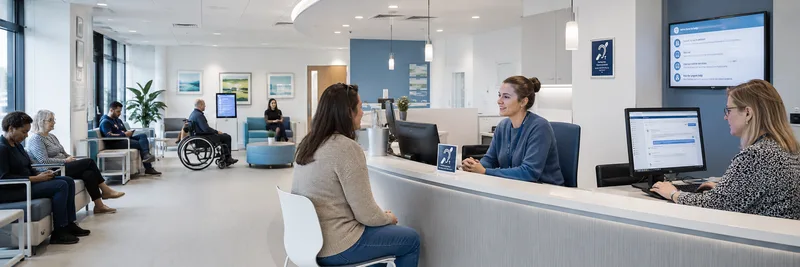
GP reception area with receptionist and patient

The front desk can be challenging for Deaf, deafened and hard-of-hearing patients. Background noise, privacy screens, people speaking while looking away and hurried instructions make understanding harder.

Small changes can help

Face the patient and keep your mouth visible where possible. Use a normal volume and speak clearly. Offer to write down key details if that is the patient’s preference. Do not shout across the desk or discuss sensitive information where others can see or overhear.

If the patient lip-reads, ensure good lighting and an unobstructed view of your face. If they prefer written communication, keep messages brief and check understanding before ending the contact.

Deaf awareness - tools and techniques for communicating with people with hearing loss.

Video: 2m 29s · Creator: Barking, Havering and Redbridge University Hospitals NHS Trust. YouTube Standard Licence.

This Barking, Havering and Redbridge University Hospitals NHS Trust video demonstrates practical techniques for communicating with Deaf patients and people with hearing loss. It begins by emphasising that Deaf patients should have access to a registered sign language interpreter, then describes safer communication steps staff can use when an interpreter is not immediately available.

The video recommends finding the patient’s preferred communication method, getting attention with a wave and a smile, facing the person, staying in their field of vision and keeping eye contact. Speak clearly rather than shouting, since shouting can distort lip movements, and remember that lip-reading is limited, especially when several people speak at once.

It advises repeating or rephrasing when needed and clarifying the subject before changing topic. If communication is failing, write information down. Do not assume a friend or family member is an interpreter. When an interpreter is present, continue to face the patient. Be patient, flexible and respectful, and do not treat deafness as incapacity.

Was this video a good fit for this page?

Protect privacy

  • Do not make the patient disclose private information loudly.
  • Offer a more private route when sensitive issues are involved.
  • Use written notes carefully so they are not left visible.
  • Check whether the patient can understand waiting-room announcements.

Accessible communication must still protect confidentiality and dignity.

Privacy risks increase when using written notes, gestures or lip-reading at the desk. Avoid displaying sensitive details on paper or screen where others can see. Offer a more private route for results, symptoms or safeguarding concerns.

Small environmental details matter at the front desk. Looking away while speaking, covering the mouth, speaking from behind screens, or calling names from another room can prevent effective access for Deaf and hard-of-hearing patients.

Scenario

A hard-of-hearing patient keeps asking you to repeat a question about a sensitive test result while other patients are waiting behind them.

What is the safer response?


Ask Dr. Aiden


Rate this page


Course tools & details Study tools, course details, quality and recommendations
Funding & COI Media Credits
