

Health inequalities and barriers to care
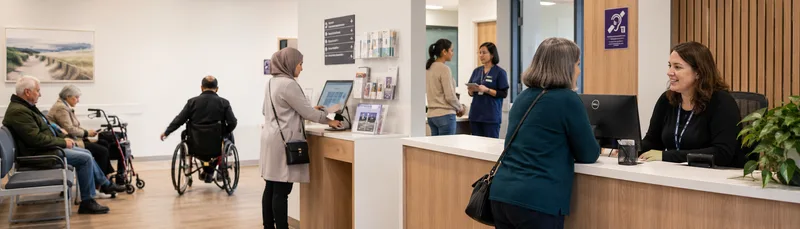
Health inequalities are unfair, avoidable differences in health or access to care. Reception teams cannot resolve them alone, but they are often the first to see how patients are blocked from services.
Barriers may be practical
Patients can be prevented from accessing care by transport problems, work patterns, caring responsibilities, homelessness, digital exclusion, low literacy, fear of services, immigration worries, poverty or language needs. An appointment system that suits one person may be unusable for another.
Care navigation is safer when staff check whether the route offered can actually be used by the patient. This is part of making access work for the person in front of you, not special treatment.
Understanding Health Inequalities
What reception staff can do
- Notice repeated failed contact or missed appointments.
- Record access barriers where appropriate.
- Use assisted access, interpreter or accessibility routes.
- Raise repeated barriers with managers for review.
When a patient repeatedly fails to use a route, ask whether the route is failing the patient.
Reception data gives useful signals. Patterns in missed appointments, repeated complaints, failure to use digital access or lack of interpreter bookings can point to access problems. Staff should be able to report these patterns without being blamed for them.
Health inequalities often show up as operational issues: missed texts, inaccessible forms, travel difficulties, language needs or repeated failed calls. Reception staff can make these barriers visible to managers so they can be addressed.
Ask Dr. Aiden
Rate this page
Sign up now for a free account
Course tools & details

