

Reasonable adjustments and accessible routes
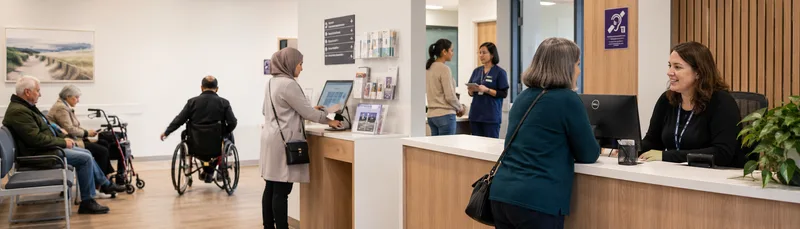
A reasonable adjustment is a change that helps a disabled person access care more fairly. In GP reception work, adjustments commonly involve communication methods, appointment length or timing, waiting arrangements, reminders, physical access or support from a carer or advocate.
Adjustments may be simple
Many adjustments are practical and low-cost: offering a quieter place to wait, booking a longer appointment where policy allows, providing information in a preferred format, arranging a BSL interpreter, allowing non-phone contact, or noting that a patient needs help with forms.
Record any identified need so the patient does not have to repeat it each time. If an adjustment requires clinical or managerial approval, staff should know how to pass the request on.
The reasonable adjustment digital flag in general practice
Check the route is usable
- Can the patient hear or understand telephone instructions?
- Can they access the building or wait safely?
- Can they use online forms or read SMS messages?
- Does the appointment time or environment create avoidable distress?
Reasonable adjustments should turn a blocked route into a usable one wherever possible.
The aim is not to meet every request automatically but to consider whether standard processes disadvantage the person. If staff cannot authorise an adjustment, they should know who can review it and how to keep the patient's need managed safely while it is considered.
Treat adjustments as routine access arrangements rather than an inconvenience. With a consistent process, staff do not need to negotiate from scratch each time and patients are less likely to feel they are asking for special treatment.
Ask Dr. Aiden
Rate this page
Sign up now for a free account
Course tools & details

