

Protected characteristics and respectful first contact
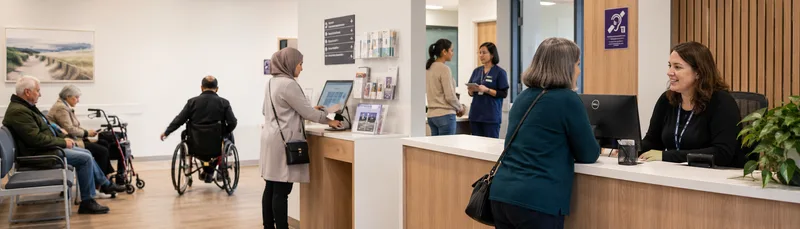
Patients must not have poorer access because of protected characteristics such as age, disability, gender reassignment, pregnancy or maternity, race, religion or belief, sex or sexual orientation, or because staff make assumptions about family, caring or relationship status. In frontline work, respect is shown through ordinary words, practical checks and reasonable choices.
What this means in reception work
Protected characteristics matter when a policy or practice disadvantages someone, or when staff assumptions change how a request is handled. For example, do not assume an older patient cannot use digital services, or that a younger patient prefers them.
Work from the patient's stated needs and the facts you can confirm. Ask how the patient wishes to be addressed, use the correct name and pronouns when recorded or provided, and avoid remarks about accent, appearance, family structure or lifestyle.
Avoid hidden assumptions
- Do not assume who is a patient's partner, parent or carer.
- Do not assume someone can read, hear, speak, travel or use a phone easily.
- Do not assume distress means aggression or confusion means incapacity.
- Do not use jokes or shorthand that could feel excluding or disrespectful.
Good first contact is based on what the patient needs and tells you, not on assumptions about who they are.
Respect also means keeping personal information out of public view. Questions about identity, family relationships, religion, disability, pregnancy, sexuality or language may be necessary for booking or care, but ask them only when relevant and handle the answers discreetly. If a conversation becomes sensitive, move to a more private route where possible.
Respectful first contact includes slowing down when identity, name, pronouns, family relationships or communication needs are unclear. A quick assumption can embarrass the patient or disclose private information. Checking politely preserves dignity and keeps records accurate.
Ask Dr. Aiden
Rate this page
Sign up now for a free account
Course tools & details

